The new Fed chair’s Jackson Hole speech appeared focused on strengthening his anti-inflation credentials, economists say.
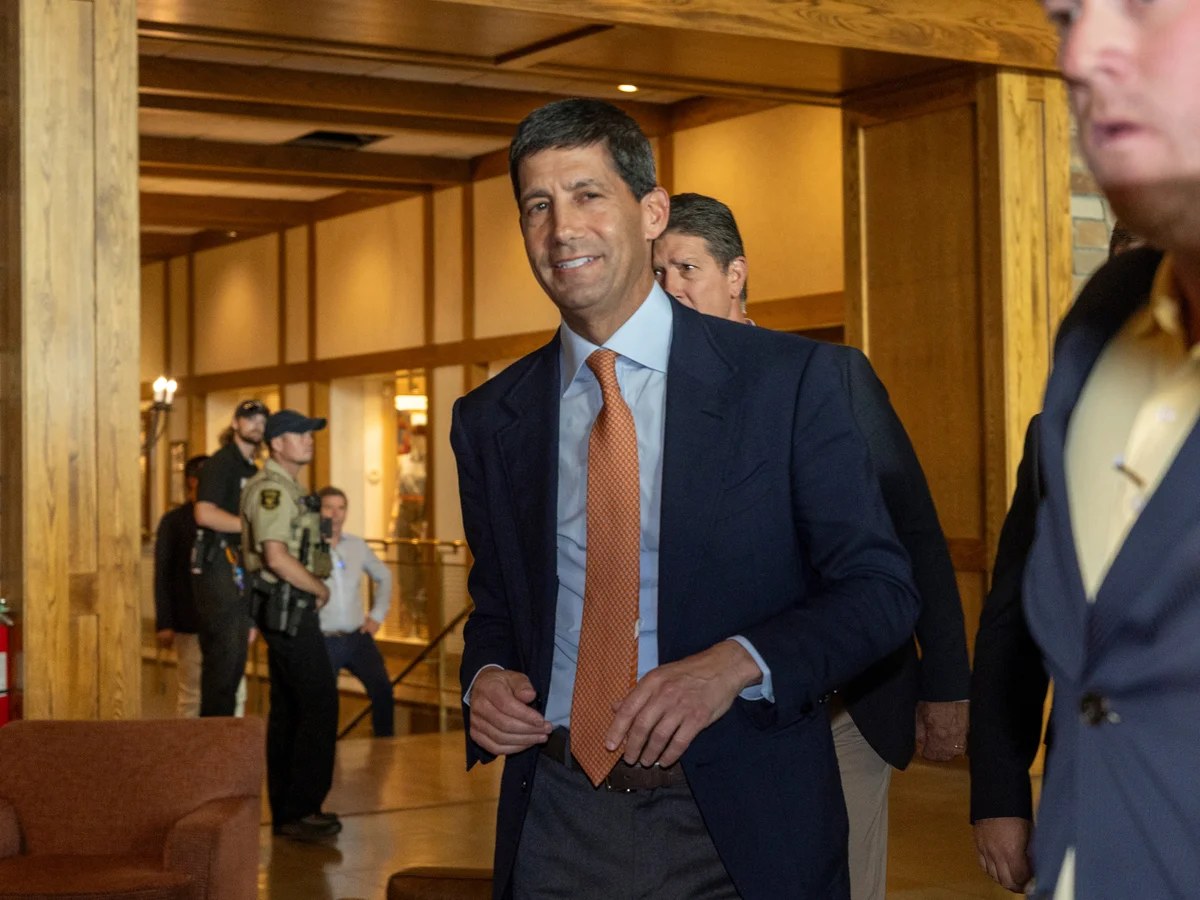
In Kevin Warsh’s debut speech as Federal Reserve chair at the annual economic symposium in Jackson Hole, Wyoming, he emphasized fighting inflation. Still, economists say it’s not yet clear when the central bank will hike interest rates.
Warsh’s speech was highly anticipated, even after the last Fed policy meeting in July, when economists say he provided a muddy picture about his willingness to raise interest rates to fight inflation. On Friday morning at the conference, sponsored by the Kansas City Federal Reserve, Warsh appeared to address those concerns. “Price stability is not self-executing, nor is inflation necessarily mean-reverting. It is the Fed’s job to deliver stable prices,” he said.
The bond market’s response to the speech was muted. Expectations of a September Fed rate hike rose to nearly 60% from below 40%, but that’s still below the chances seen for the meeting back in July. Economists say the key determinant could be what the next round of inflation data shows.
Here are some takeaways on what Warsh said about inflation, the Fed’s mandate, and what economists think it all means when the next rate decision is announced on Sept. 16.
Warsh’s Inflation View Cuts Both Ways
“While he’s made no promises, Kevin Warsh sounds ready to hike rates. Warsh emphasized the strength of real activity, downplayed labor market risks, and said high inflation should be the Fed’s ‘predominant focus’ right now.
“A key statement was that Warsh said he ‘would be hard pressed to describe broad financial conditions as restrictive.’ But given Warsh’s description of an economic regime in which inflation is nearly the sole concern for the Fed’s dual mandate, it would be appropriate to move to a more restrictive stance. That calls for higher rates. Warsh may still opt for a September pause to gather more data. He retains the option to wait and see if inflation trends down on its own. But he is speaking like someone who plans to hike rates. It seems very likely that Warsh will hike by the October meeting.
“Strikingly, Warsh mentioned the ‘better than expected’ inflation readings in recent months, while countering that it’s not clear ‘underlying trends have meaningfully improved.’ Markets, by contrast, had interpreted the recent inflation data more optimistically, lowering their expectations for rate hikes.”
—Preston Caldwell, senior US economist for Morningstar
Firmer Inflation Readings Likely to Sway Fed Towards a Hike
“In a hawkish first Jackson Hole speech as Chairman, Kevin Warsh said that with inflation ‘running above our 2 percent target,’ the Fed’s predominant focus right now should be ’that underlying inflation is moving to our objective, clearly, and at sufficient speed … otherwise, we have work to do.’ He also acknowledged that ‘this summer’s PCE and CPI readings were better than expected,’ but stressed that ‘they do not tell me that underlying trends have meaningfully improved.’ Warsh’s speech suggests that a hike in September is possible if the August CPI and PPI come in firmer, but we continue to expect that core CPI and PCE inflation will print around 0.2% in August and that the FOMC will remain on hold."
—Jan Hatzius, chief economist and head of research at Goldman Sachs
Clearing the Air on the Inflation Target
“Fed Chair Warsh’s Jackson Hole speech addressed many key market concerns about his policy agenda. Most importantly, Warsh clarified that he is focused on delivering 2% PCE inflation. This stands in contrast to his comments at the July presser, which seemed to muddy the waters on his preferred inflation measure.
“Warsh also gave us a sense of how he thinks about ‘underlying inflation,’ noting that 54% of goods and services in the PCE basket are running above 3% y/y, and that this share was much lower pre-pandemic. This isn’t a strict reaction function, but it’s a lot more information than he’s been willing to share in the past. It gives markets a sense of how he thinks about x-ing out idiosyncratic shocks. And the conclusion is firmly hawkish.
“Some analysts argued that Warsh would use the task forces as an excuse to delay rate hikes. Warsh clarified that ‘their recommendations will … have no bearing on’ near-term policy decisions. Warsh also said that ‘short-term interest rates are the predominant tool to achieve the dual mandate.’ This suggests he doesn’t view balance sheet cuts as an alternative to hikes, though he did state that ‘we should pay attention to money created by the central bank.’ I.e., he remains a balance sheet hawk.
“We were encouraged by Warsh’s speech. But talk is cheap. Given Warsh’s comments that the Fed should focus on trends rather than ‘isolated data points’ and that underlying inflation hasn’t ‘meaningfully improved’ in recent months, the onus is now on him to deliver a hike in Sep (unless the Aug jobs and inflation data are very soft). Else he will probably lose the credibility he gained today. We have long called for a Sep hike. We aren’t declaring victory yet, but we certainly feel more confident after today’s speech”
—Aditya Bhave, US economist, BofA Securities
Next CPI Report to Be Crucial
“In an ambitious and much-anticipated Jackson Hole speech, Federal Reserve Chair Kevin Warsh made the most market-moving news when he stated clearly that unless ‘underlying inflation is moving to our objective, clearly and at sufficient speed … we have work to do.’ Warsh also assessed that ‘while this summer’s inflation readings were better than expected, they do not tell me that underlying inflation trends have meaningfully improved,’ and he judged that financial conditions are not at present restrictive.
“Taking the chairman’s comments as a whole, while he did say that ‘I stand here today committed to a discipline, not to a decision,’ we believe he left little doubt that the Consumer Price Index inflation data for August that will be released just a few days before the September Fed meeting will be crucial. That fresh data may well determine whether a majority of the twelve voting members of the Federal Open Market Committee have seen enough to vote in favor of a hike in ‘short-term interest rates [that] are the predominant tool to achieve the dual mandate.’”
—Rich Clarida, PIMCO economic advisor and former vice chair of the Federal Reserve Board
PCE Inflation Continues to Drive Fed Policy
“Jackson Hole was less about signaling September and more about restoring clarity and credibility. Chair Warsh reaffirmed that 2% PCE inflation remains the Fed’s firm objective, that interest rates remain the primary policy tool, and that the recent run of softer inflation data has not yet demonstrated a meaningful improvement in underlying trends. He didn’t provide forward guidance, but he made it clear that with labor markets stable, growth resilient and financial conditions not particularly restrictive, the burden remains on the inflation data. Markets appear to have taken comfort from that clarity, with higher front-end yields accompanied by a stable long end, suggesting greater confidence in the Fed’s inflation-fighting framework.”
—Daniel Siluk, global head of short duration and liquidity and portfolio manager, Janus Henderson Investors
Still No Forward Guidance from Warsh
“In his first Jackson Hole speech as Chair, Kevin Warsh presented an unambiguously hawkish message, while also (as usual), not including any forward guidance about what the Fed will do next. Warsh noted that disinflationary progress has not been sufficient, and with growth solid, employment stable, and financial conditions loose, his diagnosis leans clearly toward holding rates higher, and potentially raising them if inflation fails to improve. In the near-term, we think policy will hinge on incoming inflation data that will affirm or contradict the softer inflation prints received this summer. According to markets, a hike in September is slightly more likely than not. We think September’s decision will be a very close call, but lean toward softer labor and inflation data as the basis for another hold.
—Christopher Hodge, chief US economist, Natixis.
The author or authors do not own shares in any securities mentioned in this article. Find out about Morningstar’s editorial policies.