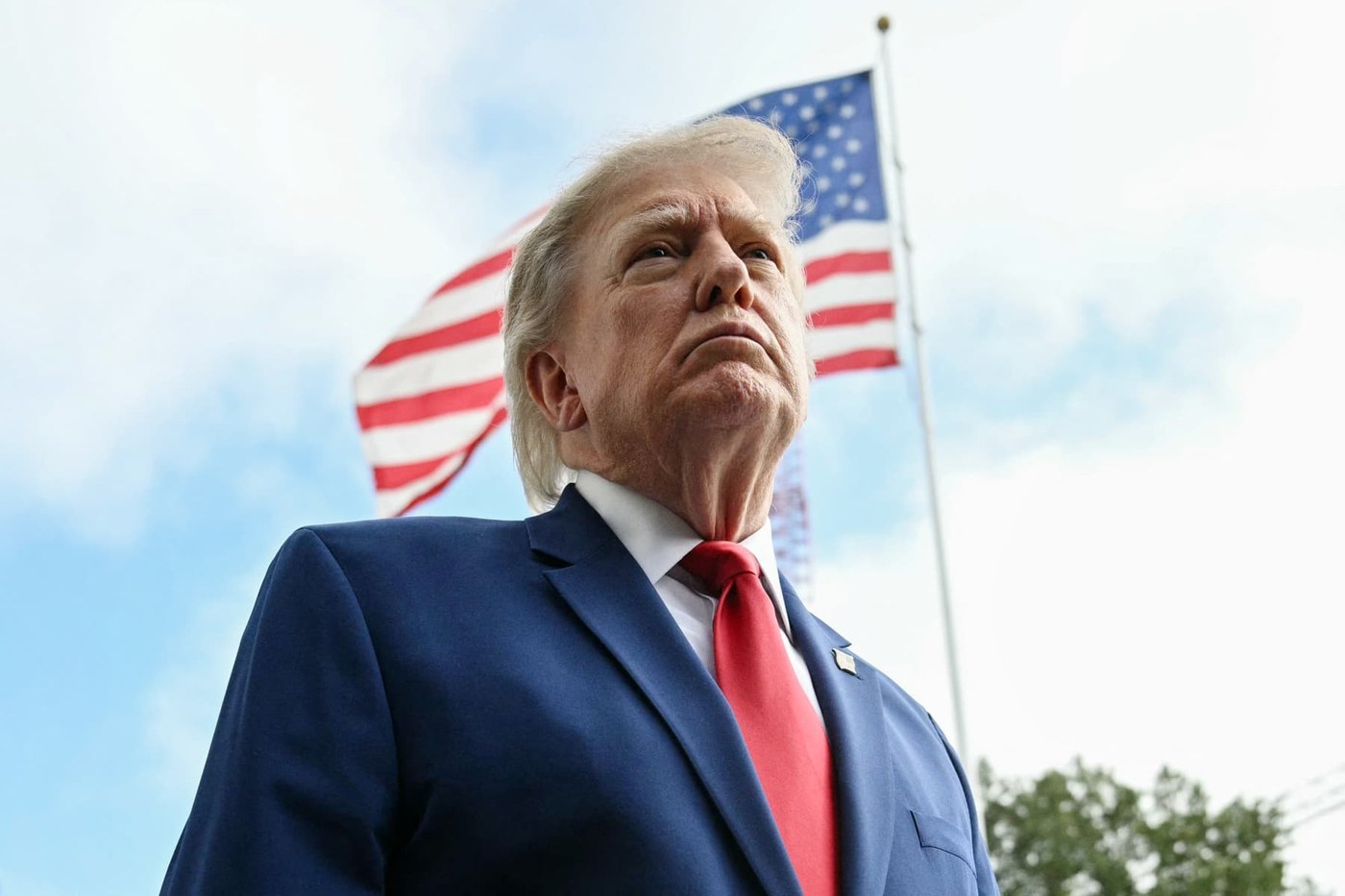
President Donald Trump forged an extraordinary coalition to win office in 2024, stitching together his base with unusual support from some traditional Democratic groups like Hispanics and young people. It was enough to sweep the battleground states and catapult him into office for a second term.
The latest CNBC All-America Economic Survey shows that coalition is now seriously weakened.
Since the beginning of his second term, the president's net approval rating among Latino voters has dropped from -22 to -38, and declined from -28 to -53 among 18- to 34-year olds. Black respondents have moved from -55 to -67.
Among all registered voters, his approval has fallen from -7 at the start of his term to -19 in the most recent survey.
The decline in the president's approval carries over into the Republican base. Approval from self-described Trump voters has fallen from a net +85 in 2025 to a net of +65. Net approval has even turned negative in the South, from +2 in 2025 to -20 in the latest survey.
The results of the latest poll show why Republicans are facing an uphill battle in the midterm elections next week. Trump is not on the ballot — but his presence will be felt.
To be sure, Republicans in the survey still give the president an 82% approval rating, and those who say they identify with the MAGA movement are at 90%. But interest in the election is 10 points lower among Republicans than it is for Democrats, and in tight races, the party that better turns out its voters will have an advantage.
The survey of 1,000 registered voters nationwide found 44% of respondents say their biggest worry if Republicans control Congress is allowing President Trump to operate beyond his constitutional power. By contrast, 28% say their biggest worry for Democratic control is passing policies of Democratic Socialists. For either party's control, registered voters worry that Congress won't do enough to bring down prices.
The survey was conducted Oct. 14-18, and was co-led by Democratic pollster Hart Research Associates and Republican pollster Public Opinion Strategies. It carries a margin of error of plus or minus 3.1 percentage points.
As a second-term president who had skipped four years between terms, Trump's arc of approval has followed an unusual path. The president left office above water on the economy, with 48% approving and 41% disapproving — high numbers for a president whose last year was overwhelmed by the Covid pandemic.
But there was no second-term honeymoon. Trump was immediately underwater in his economic approval rating in the April 2025 CNBC survey. That could have reflected immediate public discontent with the tariff regime and resulting market turmoil. The president's economic approval rating remained negative through most of his first year.
The bottom dropped out, however, with the launch of the Iran war. By April 2026, the president's net economic approval rating was plying depths last seen under President Joe Biden amid the aftermath of the pandemic, when the country was facing high inflation and elevated unemployment.
In the first quarter of this year, Trump's net economic approval dropped 10 points to -21. It has plunged to -31 in the latest survey. Economic disapproval rose to 65%, the highest for any president CNBC has measured back to President Barack Obama, and one point higher than Biden's worst showing. The survey shows increasing disapproval of Trump's handling of inflation. Over the same time, shooting of Americans by Immigration and Customs Enforcement officers began to dominate headlines, eroding support for one of the president's major policy initiatives.
The survey this quarter appeared to pick up growing frustration with a host of issues, from immigration to the economy, among those demographic groups that had supported the president in unusual numbers in 2024, with sharp declines in economic and overall approval among Latinos, young people and those in the $50,000 to $75,000 income group.
Most ominously for the president, views on the economic outlook fell 22 points for Republicans. Though still net positive, it was the lowest level of economic optimism for Republicans since Biden.
These downbeat views on the economy do not automatically translate to votes for Democrats. The survey showed a 7-point preference for Democratic control of Congress, a 3-point gain from the July survey. While Republican economic pessimism grew, so did their preference for a Republican-controlled Congress, from 85% in July to 87% in October.
Blue-collar workers show how the president has maintained his base amid growing concern about the economy. Their net economic approval of the president has plunged 22 points to -15 from the beginning of Trump's term to now. But their overall presidential approval remains +6, just a four-point drop. They still prefer a Republican-controlled Congress by 21 points, though that is down from 33 points in July.
The days and weeks leading up to the election have seen the president barnstorming through red states, a sign of concern with the base's enthusiasm. But it also creates the possibility that he could fire up his base and bring them out to stanch potential Democratic gains.
The survey shows that the extra votes from the coalition that put Trump in the White House in 2024 would be a reach for Republican congressional candidates in 2026.