The bond market is yelling at the Federal Reserve, but the messages are coming from different directions and pose a dilemma for policymakers as they seek to strike a balance that won't tank the economy.
Treasury yields continued their upward march Thursday as investors sought to price in a variety of factors: inflation still hovering well above the Fed's 2% goal, another bump up in energy prices and the impact of a global hyperscaler financial arms race and accompanying debt issuance.
In the past, policymakers have been willing to look through inflation spurts from temporary shocks like high energy prices and tariffs. And the narrative not so long ago was that the artificial intelligence investing boom was a story that would last a year or two and ultimately prove disinflationary.
But now Fed officials are rethinking the impact of those factors and seeing the danger of more durable inflation.
At the same time, markets are grappling with a central bank that suddenly has no interest in telegraphing its next moves, leaving an uncertain calculus on who is calling the shots — policymakers or market players.
"The time of looking through the initial supply shock has come to an end," said Joseph Brusuelas, chief economist at RSM. "The bias has to be towards restoring price stability, and they should take what's going on seriously."
Markets expect the central bank will indeed take a firmer hand on inflation.
Over the past day or so, traders raised the odds of a rate hike in October, which would come only a month or so after last week's quarter percentage point increase. They also see a third increase either late this year or early in 2027, with additional hikes possible in subsequent months.
Big switch
That's a big switch from a Fed that in June projected it might hike once this year and then be done before starting to cut in the next couple of years.
"My view coming out of the [September] meeting was that we're going to get three rate hikes," Brusuelas said. But modeling performed at his firm about the potential for higher yields, along with a prolonged cycle of AI investment, changed that view.
The modeling indicated that sharply higher long-term yields could slow growth and increase unemployment and still not get inflation back to 2%. RSM found that even a 5.5% 10-year yield — it was around 5.15% on Thursday — would lower growth to 1.5% and lift unemployment to 4.7% while core inflation remained stuck at 2.4%.
"The Fed is underestimating what's going to be necessary to restore price stability — that we're probably not talking two or three hikes. We're talking five or six," Brusuelas said.
Not everyone on Wall Street agrees. Some strategists think the market is getting ahead of itself — that yields now essentially are pricing in stronger economic growth and are overly sensitive to the vagaries of oil prices amid the ongoing tensions in the Middle East.
"The rise in yields has not been due to expectations of a too-dovish Fed allowing inflation to persistently exceed target. Instead, the rise has been in real yields as investors priced-in the Fed setting higher policy rates," Citigroup economist Andrew Hollenhorst said in a note. "It should not be surprising that this has led to both higher shorter-term and longer-term yields."
Indeed, several key Fed officials, while endorsing near-term rate hikes, also are counseling patience.
Case for restraint
New York Fed President John Williams, whose position puts him in the vice chair slot of the rate-setting Federal Open Market Committee, said Thursday that it's "reasonable" to expect another hike by the end of the year, but also noted that officials need to keep watching the data before getting on a pre-set "forward guidance" track of locking in rate hikes.
Similarly, Philadelphia Fed President Anna Paulson also indicated additional policy tightening is likely but characterized the potential moves as "modest," hardly an indication that she thinks a string of hikes is likely.
Still, the Fed faces a policy crossroads: Tighten too much and risk cutting off the expansion, or tighten too little and risk losing the market's faith that it is sufficiently tuned into inflation risks.
"Weak guidance guardrails risk putting both central banks in a position where they may have to decide between a sub-optimal hike and disappointing the market and risking hard-won credibility," Krishna Guha, head of economics and central bank strategy at Evercore ISI, said in a note. "Lack of guidance also means whatever decision they take risks generating an outsized market response — either substantially further tightening or easing market rates."
Guha is in the camp that the market's expectations are "too aggressive" while also seeing the Fed's dilemma.
"Delivering back-to-back hikes — particularly without forward guidance as to how to interpret them — would risk sending a very hawkish signal that would reprice the rates curve further and to an unpredictable extent," Guha said. "But, skipping a hike priced odds-on in the market could also lead to a large repricing in the other dovish direction."
The Fed at odds
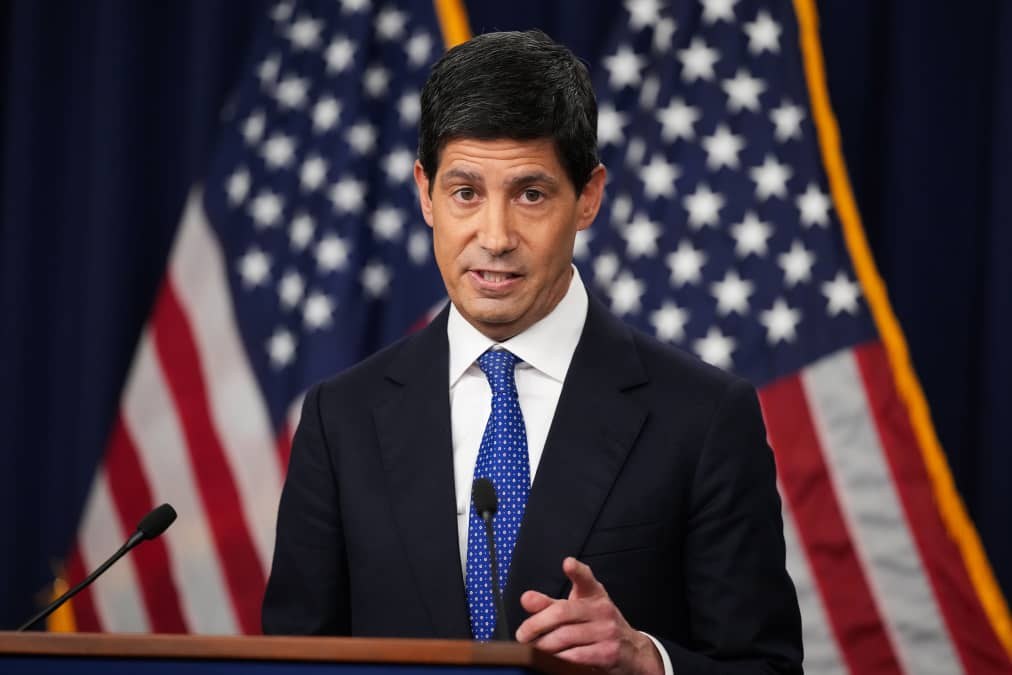
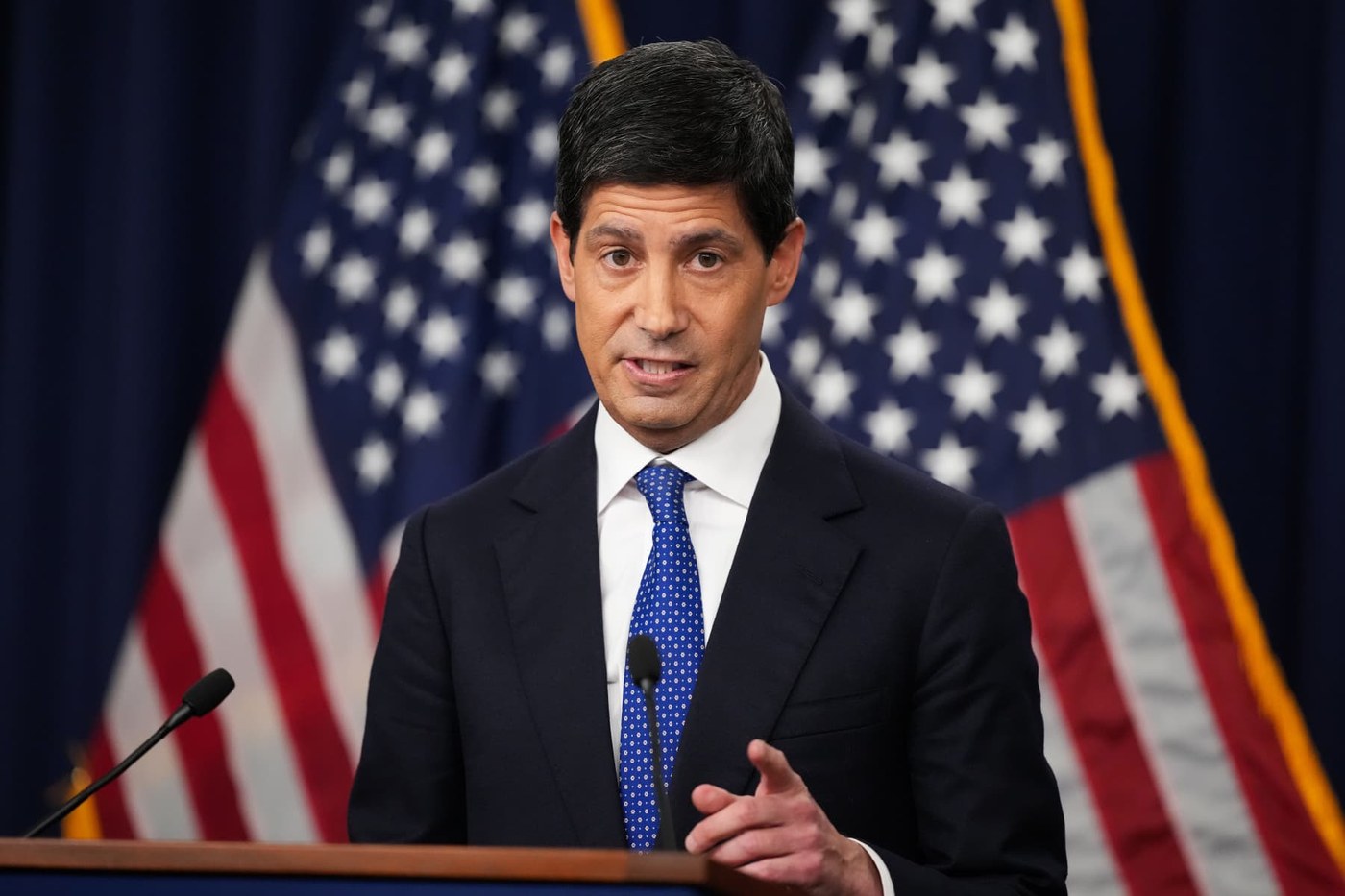
The conflict is critical now because Federal Reserve Chairman Kevin Warsh has emphasized letting markets help guide policy. That's a big reversal from central bank policy since the global financial crisis in 2008, when the Fed used its forward-guidance tool to signal to investors which way rates were headed.
"His framework appears significantly less rooted in economic measurement details and significantly more reflective of market narratives," UBS economist Jonathan Pingle wrote of Warsh. "No Chairman of the Board of Governors of the Federal Reserve has emphasized considering the signals from financial markets as an input into monetary policy decisions as strongly as Chairman Warsh."
With a yield surge that has taken the 30-year bond to its highest level since 2004, market dynamics have swung Warsh from someone calling for cuts prior to taking the job in May, to a chair who seems to have forged a hawkish coalition on the FOMC.
In fact, Pingle speculated that Warsh, following last week's post-meeting news conference, "left little doubt to us that his views more closely align" with Cleveland Fed President Beth Hammack, arguably one of the most hawkish of this year's voting group, "than anyone else on the FOMC."
For now, at least, markets are going with the interpretation that Warsh will let the Treasury market guide him toward progressively higher benchmark rates.
"There's a good reason why central bankers are beginning to be concerned about overheating in the investment section of the economy," said Brusuelas, the RSM economist. "Mr. Market is signaling something to policymakers like Kevin Warsh that they ought to listen to."