Add Shattered once in the Google app and our stories show up in your news suggestions.
Huang’s Exit From Nvidia: What Is Confirmed
Nvidia announced on November 12, 2026 that Jensen Huang resigned as president, chief executive officer and board member, effective immediately. The company named Colette Kress, its executive vice president and chief financial officer, as interim CEO. Kress keeps her finance duties while the board searches for a permanent chief executive, weighing both internal and external candidates, according to Nvidia’s own statement.
The Register, which has framed the story as a possible turning point for the AI trade, reported that the resignation took effect through a securities disclosure. The Five Nines reported that Harvey C. Jones became the board’s first-ever chair. Huang co-founded Nvidia in 1993, so the exit closes more than three decades at the top, as the Charlotte Observer and The Philadelphia Inquirer both noted.
The circumstances are messy, and this analysis does not try to settle them. The Register and The New York Times tied the resignation to reports about Huang’s personal conduct, including a relationship with a company employee. Those reports do not establish a criminal finding against him. For the opening timeline, read our earlier coverage of Huang quitting after 33 years and Kress stepping in. This piece asks a narrower question: does the Jensen Huang AI bubble story end with a pop, or with a gift to competitors?
The Jensen Huang AI Bubble Question
Two readings of the resignation have taken hold in the press. The first says Huang was the face and the salesman of the AI buildout, so his departure removes the person who held a fragile story together. The second says the demand for AI compute is real and larger than any one company, so the exit simply hands rivals an opening. Both readings can look right at once, which is why the debate has stayed noisy.
The Register’s framing leans toward the possibility that this is the start of something bigger than a boardroom shake-up. Other outlets, including coverage cited around the market reaction, have focused on who picks up the pieces. The honest position today sits between them. Nothing in the verified record shows that the AI bubble has burst, and nothing shows that any competitor has already won a single extra customer because of the resignation.
That gap matters for readers who invest, build or buy in this market. A leadership shock is an event, while a bubble is a pricing condition that rests on spending, financing and expected returns. Huang’s exit can speed up a repricing that was already under way, or it can pass as a governance story if Nvidia keeps shipping and customers keep paying. The evidence needed to choose between those paths arrives over quarters, not days.
It also helps to separate the company from the category. Nvidia can suffer a bad stretch while the AI industry keeps growing, and the reverse is possible too. The word bubble, in the sense investors use it, describes prices running ahead of cash flows across the sector, not the fortunes of one chip designer. That distinction shapes everything below.
Market Reaction: Nvidia Slips, Rivals Advance
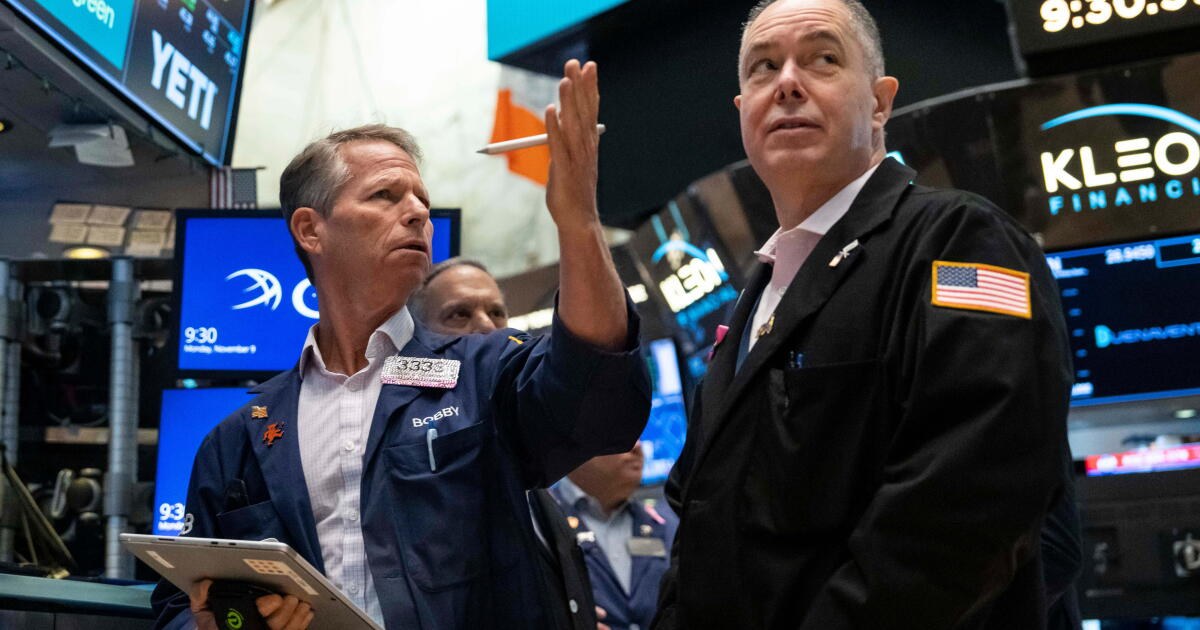
The Associated Press reported that Nvidia shares fell in early trading on November 12 after news of the departure. Reports also said shares of Broadcom, Intel and Advanced Micro Devices advanced, as investors bet on greater supplier diversification. That split is the clearest market signal so far, and it points toward the boon-for-competitors thesis rather than a sector-wide collapse.
Chester Spatt, a finance professor at Carnegie Mellon University, put a ceiling on the optimism. He said, “Their gains are going to be smaller than Nvidia’s losses.” His point is about arithmetic. If investors pull money from the category leader because of a leadership shock, only part of it flows to rivals. The rest leaves AI chip stocks altogether, which is what a cooling trade looks like.
Traders also priced in the gap between what Huang represented and what the business does day to day. Nvidia’s engineers, product roadmap and customer contracts did not resign on November 12. What changed is the confidence premium that attached to a founder who had run the company since 1993. Markets tend to charge for that premium quickly and refund it slowly.
One caution applies. A one-day move in share prices says little about market share, because chips ship under contracts signed a year or more ahead. Reports so far describe sentiment, not orders. No verified AMD revenue, shipment or customer-win figure tied to the resignation has appeared in the sources used for this article.
Nvidia’s Lead in Numbers: What IDC and Gartner Show
To judge how much any rival can take, start with how lopsided the market is. IDC’s semiconductor outlook, presented at a SEMI event, put Nvidia’s share of the AI accelerator market at 85.2% in the second quarter of 2025, against 1.8% for AMD. That is the most recent verified split of the accelerator category in this research.
Gartner’s worldwide view looks different because it counts all semiconductor revenue. In its January 2026 analysis of 2025 results, Nvidia held 15.8% of worldwide semiconductor revenue, Intel held 6.0% and AMD held 4.1%. Gartner’s research also found that AI infrastructure spending drove more than 75% of the absolute revenue increase in the worldwide semiconductor market in 2025.
The table shows why both camps can claim the data. An 85.2% share leaves almost no room to grow and plenty of room to lose, so even small shifts would matter to rivals. Yet a 1.8% share for AMD in that segment means a rival needs years of execution, not a news cycle, to move the needle. Our own AMD versus Nvidia GPU chart covers the consumer side of that rivalry for readers who want the gaming view.
AMD, Intel, Broadcom and Huawei: Who Could Gain
Reports named AMD and Intel as the two most likely beneficiaries if Nvidia loses ground, and described Huawei as a Chinese competitor that could gain from stronger US export controls on American chips. Broadcom entered the conversation through the same share-price move. A technology analyst identified only as Naji said, “This presents an opportunity for some of Nvidia’s competitors to take a bigger share of the market than they were planning to over the next few years.”
Merchant GPUs: AMD and Intel
AMD and Intel sell accelerators and processors on the open market, so a customer worried about single-supplier risk can place an order with either. That is the simplest path to diversification, and it explains why their shares moved on the news. The constraint is software and supply. Buyers who built their code around Nvidia’s tooling face switching costs that no resignation removes.
Custom silicon: Broadcom
Broadcom plays a different game. Its exposure comes through custom accelerators built for large cloud customers, which lets those customers lean less on Nvidia. For a deeper look at how GPUs, TPUs and NPUs split the field, see our explainer on the four AI chip camps. The Broadcom move in shares suggests investors see custom silicon as a hedge against the leader’s wobble.
The pattern in that table is consistent. Every rival has a plausible story, and none has proof yet. Anyone selling the idea that competitors will definitely replace Nvidia as market leader is running ahead of the record. The more defensible statement is that the odds of a competitive market improved at the margin.
Huawei and the Export Control Angle
Reports tied Huawei’s upside to US policy. If Washington tightens limits on American-made chips headed to China, Chinese buyers have fewer places to turn and a domestic supplier gains by default. That logic predates Huang’s resignation, but the resignation raised the temperature. Our analysis of why earlier chip curbs fell short shows how hard enforcement has been, which is part of why any new round carries uncertainty.
The export angle cuts two ways for Nvidia. Tighter rules would hurt its China business directly, while looser rules would keep Chinese customers inside its ecosystem and starve Huawei of a push. Nobody knows which direction policy will go after a CEO change at the most prominent American chip company. Officials have their own agenda, and the resignation landed in the middle of an already tense policy debate.
For global readers, the useful point is that Huawei’s gains, if they come, depend on Washington more than on Nvidia’s boardroom. A stronger Huawei would not require Nvidia to stumble. It would require American policy to close the door. That makes Huawei a less direct beneficiary of the Huang story than AMD or Intel, even though reports list it alongside them.
Circular Financing: Why Bubble Talk Followed Huang
Reports linked the exit to a longer-running worry about circular dealmaking. The concern runs like this: Nvidia invests in or finances AI companies, those companies spend the money on Nvidia chips, and the resulting sales support Nvidia’s valuation. Critics call it a loop that can inflate demand figures. Defenders call it ordinary strategic investing by a company with a large cash pile.
One report said Nvidia made a commitment exceeding $100 billion toward an OpenAI data center. Another said it committed $10 billion to Anthropic, in a piece discussing the effect on Anthropic’s valuation. A third report said Nvidia had committed tens of billions of dollars each to OpenAI and Anthropic, though it did not establish exact amounts for both. Those figures are reported, and the three reports do not match each other, so treat the sums as approximate. We tested the larger framing in a separate piece on the circular financing claim and its $250 billion figure.
Why would Huang’s exit sharpen this worry? Because the financing relationships were built on his personal credibility with AI lab founders. A new or interim leadership team has to reassure partners that the commitments stand. Partners will watch for any softening in terms, and rivals will pitch alternatives. The bubble argument does not need a collapse in demand to gain force. It only needs doubt about who vouches for the loop.
Anthropic and OpenAI Exposure
The reported Anthropic angle drew attention because it linked a chip supplier’s leadership to a customer’s valuation. An analyst expected a haircut of 10 to 15 percent, and possibly 20 percent, to Anthropic’s valuation. That figure is an analyst’s expectation, not an established fact, and no valuation change has been confirmed. Readers should not treat the number as a forecast the market has accepted.
The logic behind the worry is straightforward. If the leading supplier looks less stable, investors may discount the AI labs that depend on its hardware, since compute cost and availability drive their growth plans. OpenAI, with its reported data center commitment above $100 billion from Nvidia, sits in the same web. Our look at what the resignation means for AI labs found no change to compute arrangements so far.
Enterprise demand adds a second layer. McKinsey’s State of AI 2025 report found that nearly two-thirds of surveyed organizations had not yet begun scaling artificial intelligence across the enterprise in 2025. Bulls read that as room to grow. Bears read it as proof that spending on chips has outrun spending by customers who actually use AI. Both readings fit the same sentence, and the next two years of adoption data will decide which one wins.
Expert Views: Horse Race or Smaller Gains?
Bret Greenstein, chief AI officer at West Monroe, offered the most optimistic read for the broader industry. He said, “This could turn what has effectively been a monopoly into a horse race again, as competitors rush to meet growing demand.” The comment treats the exit as a competitive reset rather than a crisis.
Greenstein added a second point that speaks directly to the bubble question: “Nvidia did not create that demand, and a shift in this part of the market could ultimately diversify the supply chain, create more choice for customers and strengthen the broader AI industry in the years ahead.” In plain terms, he argues that demand for AI compute exists independently of Nvidia, so the category survives even if the leader stumbles.
AMD chief executive Lisa Su has long argued for a multi-architecture world. In a 2024 CNBC interview she said, “It’s important to understand that there is no singular solution in computing.” That remark predates the resignation by two years, and it shows how AMD pitches itself, not how it reacts to the news. It is useful context, since it explains why AMD’s pitch lands better now.
Put the three voices side by side and a pattern emerges. Greenstein sees opportunity for the industry, Naji sees opportunity for competitors, and Spatt sees losses that outweigh the gains. None of them says the AI buildout is over. The disagreement is about who captures value, which is a competition question, not a bubble question.
Historical Context: Founder Exits and Demand Cycles
Nvidia’s story runs from a 1993 founding to a position as one of the central companies of the AI boom, a rise our 33-year retrospective covers in detail. Few chip companies have tied their identity so closely to a single leader. That concentration is why the November 12 announcement hit harder than a typical executive change would.
Technology booms tend to end through a mix of overbuilt supply, slowing customer returns and a loss of narrative. A leadership shock rarely starts the unwinding by itself, but it can speed up an unwinding already forming. The useful historical lesson is about timing. Cycles turn when financing tightens and customers cut orders, and a boardroom event matters only if it triggers one of those two things.
The 2025 data supports a cautious reading. Gartner found that AI infrastructure spending drove more than 75% of the absolute revenue increase in worldwide semiconductors, which means the industry’s growth rests on a narrow base of demand. A narrow base is not a bubble by definition, but it raises the cost of any shock. Readers following the wider sector can find more in our AI and machine learning coverage.
Three Scenarios: Pop, Reset or Business as Usual
The table below lays out how the story could unfold. It is analysis, not a forecast, and each row names a signal that would show which path is real. No scenario is confirmed today.
Notice that three of the five rows end with someone other than Nvidia gaining, yet only one describes a true bubble deflation. That mirrors the split in expert opinion. Most credible paths involve rivals benefiting, while the sector-wide collapse remains the least supported outcome on current evidence.
Five Predictions for the Next 12 Months
These are analytical judgments based on the confirmed reporting above. None is a certainty, and each could fail if events break differently.
- Nvidia names a permanent CEO within the next year. Boards rarely leave an interim in place for long at a company of this size, and customers need a decision-maker for multi-year commitments.
- AMD and Intel announce more multi-vendor wins than they did in 2025. Buyers worried about single-supplier risk have a fresh reason to place at least pilot orders.
- Nvidia keeps most of its accelerator lead. An 85.2% share does not erode quickly, and software lock-in slows switching, so any shift will look gradual.
- Circular financing draws more scrutiny. Regulators, analysts and journalists will probe the OpenAI and Anthropic arrangements, and disclosures will get more detailed.
- Export policy becomes the main swing factor for Huawei. Its fortunes will track Washington’s decisions more than Nvidia’s governance.
The third prediction sits in tension with the competitor hype, and that is deliberate. Share data moves slowly, and a leadership scare changes sentiment faster than it changes supply contracts. A real shift would show up first in rival earnings calls, not in headlines.
What to Watch Next: Succession, Earnings and Orders
Three things will tell readers more than any opinion piece. First, the succession process. Our report on the CEO search, which had chosen no firm and engaged no candidates at the time, shows how early the process is. A fast, credible hire would calm partners, while a drawn-out search would feed the bubble narrative.
Second, the next earnings report. Nvidia’s largest customers are hyperscalers, and how much of revenue they represent shapes how exposed the company is to any spending pause. Our guide on how to read Nvidia earnings and hyperscaler concentration explains the line items worth checking. Look at guidance, customer commentary and any language about supply or demand shifts.
Third, rival disclosures. If AMD, Intel or Broadcom name new large AI customers in coming quarters, the boon thesis gains support. If they stay quiet, the share-price move on November 12 will look like a sentiment blip. Developers should also watch software compatibility news, because tooling is the real barrier to switching suppliers.
What Remains Unconfirmed
Several popular claims lack support in the verified record. No source establishes that Huang’s departure marks the beginning of the end of the AI bubble. No source establishes that competitors will replace Nvidia’s market leadership. The 10 to 15 percent haircut for Anthropic, with a possible 20 percent, remains an analyst’s expectation and not a market fact.
Details about Huang’s personal conduct and any national-security questions come from press reports, and those reports do not establish a criminal finding against him. This article treats them as context for the resignation and nothing more. Share-price moves on November 12 were early-trading reactions, so they say little about full-year results or market share.
The takeaway: the Huang saga is a real shock to the most important company in AI hardware, and it opened a real opening for rivals. Whether it also signals a turn in the wider cycle depends on financing, customer spending and policy, none of which changed on November 12. Readers should expect a longer, quieter story than the headlines suggest.
FAQ: Huang, Nvidia and the AI Bubble
Did Jensen Huang resign from Nvidia? Yes. Nvidia announced on November 12, 2026 that Huang resigned as president, CEO and board member, effective immediately. Colette Kress is interim CEO.
Does the resignation mean the AI bubble is ending? Not according to the verified record. The claim that it marks the beginning of the end is unconfirmed. Reports describe a leadership shock and a market reaction, not a collapse in demand.
Which companies could gain from Nvidia’s turmoil? Reports named AMD and Intel as potential share winners, noted gains in Broadcom shares, and said Huawei could benefit from stronger US export controls. None has shown measurable gains tied to the exit.
How big is Nvidia’s lead in AI accelerators? IDC put Nvidia’s share at 85.2% in the second quarter of 2025, against 1.8% for AMD. Gartner put Nvidia at 15.8% of worldwide semiconductor revenue in 2025.
What is circular financing? It describes a loop in which a chip supplier invests in AI companies that then spend on its chips. Reports said Nvidia committed over $100 billion toward an OpenAI data center and $10 billion to Anthropic, though a separate report did not establish exact amounts for both.
Will Anthropic’s valuation fall? That is unconfirmed. An analyst expected a haircut of 10 to 15 percent, possibly 20 percent, but this is an expectation and not an established outcome.
Who runs Nvidia now? Kress, the chief financial officer, serves as interim CEO while keeping her finance role. The board is searching for a permanent chief executive and The Five Nines reported Harvey C. Jones as its first-ever chair.
What should buyers do now? Nothing dramatic. Existing contracts and roadmaps have not changed, but buyers who depend on one supplier have a good reason to test alternatives and review software portability.