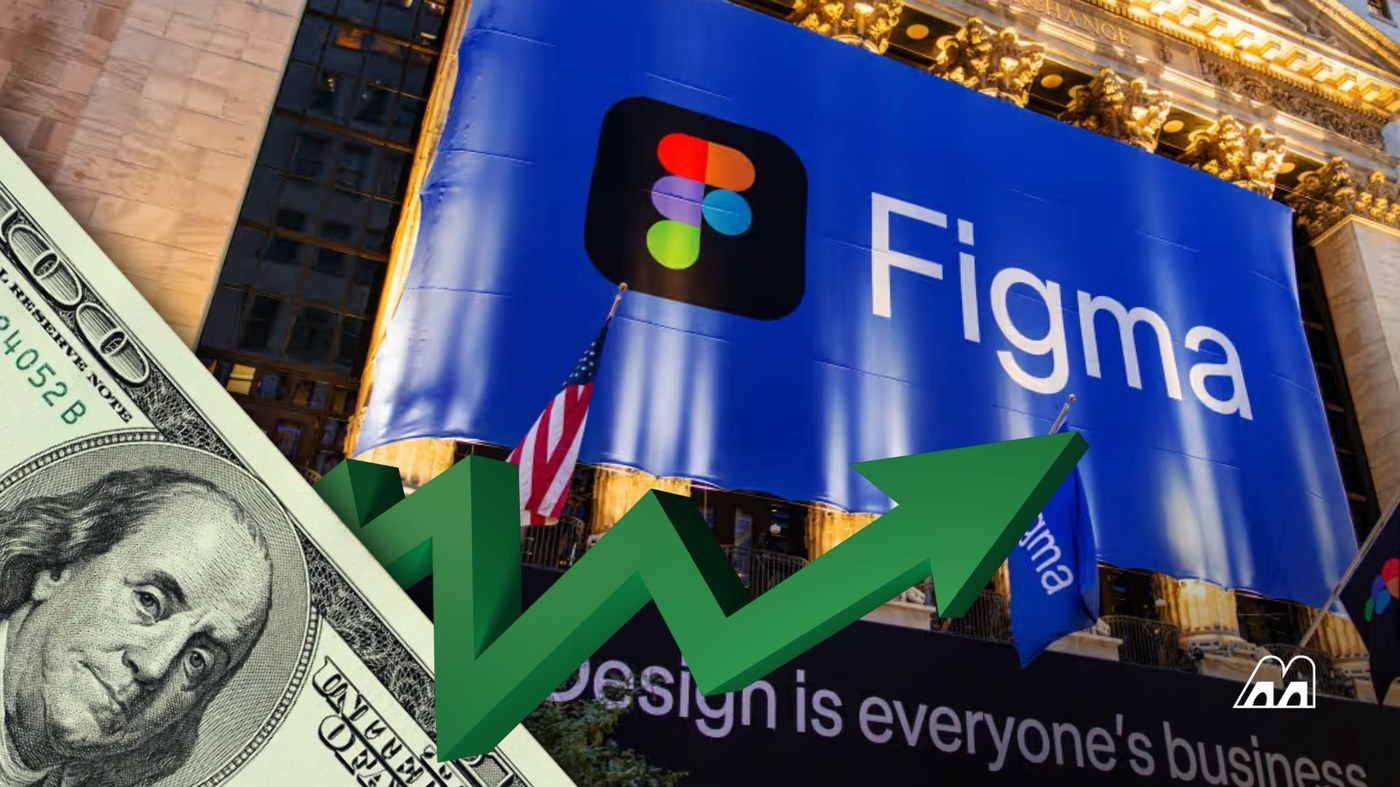
- Figma posted $89M in Q1 2026 free cash flow on a 27% margin, with revenue jumping 46% year-over-year to $333M.
- Working capital gave FIG a structural cash advantage — customers prepay subscriptions before Figma even books the revenue.
- Despite the strong financials, FIG stock has dropped 49% in 2026 and sits at roughly $19.7, down from an all-time high of $143.
- Insider selling by the CEO, CFO, and CRO during Config 2026 rattled investors who were already watching a $6B+ lock-up overhang.
- AI tools from Adobe, Canva, and Anthropic's Claude Design are pressuring Figma's premium valuation even as Figma ships its own AI features.
Figma just reported one of the cleanest cash flow quarters in SaaS — and its stock still fell nearly 50% this year. The design platform pulled in $333 million in Q1 2026 revenue (up 46%), generated $89 million in free cash flow, and raised full-year guidance by $55 million. Here’s what Figma’s working capital strength actually reveals about FIG — and why the market isn’t buying it yet.
Figma’s Cash Machine Still Works
The raw numbers look impressive. In Q1 2026, Figma generated $97.3 million in operating cash flow, good for a 29% margin. Free cash flow came in at $88.6 million, or 27% of revenue. That’s strong for any software company, let alone one that still posts GAAP losses.
What makes Figma’s cash engine unusual is how little capital it needs to keep running. The company spent just $7.8 million on capital expenditures and only $0.9 million on internal-use software. Almost every dollar of operating cash flow converts directly into free cash flow. It ended the quarter with $1.6 billion in cash, equivalents, and marketable securities — more than enough runway to fund growth without raising debt or selling more stock.
For context, that $1.6 billion cash reserve sits against just $53.6 million in long-term debt. Figma isn’t a company that needs to worry about liquidity. So why is the market treating it like one?
Working Capital Gives Figma a Hidden Edge
Here’s something most casual observers miss. Figma’s cash flow doesn’t just come from selling subscriptions — it benefits when customers pay.
In Q1, accounts receivable dropped by $59.5 million. That means Figma collected a large chunk of money owed to it faster than usual. At the same time, deferred revenue climbed $32.3 million as customers continued paying upfront for annual plans. Those two shifts combined for a $34.6 million boost to operating cash flow from working capital alone.
This creates what’s sometimes called a “negative cash conversion cycle” — Figma gets the cash before it delivers the service. That’s the same model that powers companies like Amazon and Salesforce. It’s structurally durable, and it means the company can self-fund expansion without burning its cash pile.
But here’s our read: working capital is a timing advantage, not a profitability fix. Figma’s GAAP net loss was $142 million in Q1, partly inflated by a one-time $199 million stock-based compensation charge tied to pre-IPO equity grants. Strip that out and the picture improves — but it doesn’t flip positive. Investors watching tech stocks lose ground across the board this year aren’t in the mood to wait.
The Stock Tells a Different Story
FIG hit an all-time high of $142.92 in August 2025, shortly after its IPO. As of July 1, 2026, it’s hovering near $19.7. That’s an 87% decline from the peak and a 49% year-to-date drop.
What happened? Three things stacked up at once.
- First, lock-up expirations. Figma’s January 2026 lock-up release flooded the market with hundreds of millions of newly tradeable shares. A larger tranche — estimated at over $6 billion in low-cost-basis stock — is expected to unlock in August 2026, creating a persistent supply overhang.
- Second, insider selling. During Config 2026 (Figma’s annual conference), CEO Dylan Field sold 174,430 shares worth $4.4 million. CFO Praveer Melwani and CRO Shaunt Voskanian sold additional stock worth about $3.9 million combined. These were pre-planned under 10b5-1 schedules — but the optics of executives selling while on stage promoting the company’s future didn’t help. Activist investor Findell Capital has also pushed Figma to sharpen its product focus and cut costs.
- Third, valuation compression. FIG trades at roughly 5.4x forward sales, above the internet software average of 3.6x. With GAAP operating margins at -41% and EPS consensus pegged at a loss of $0.78 for 2026, the premium is hard to justify on earnings alone. Goldman Sachs cut its price target from $35 to $30 in May. RBC dropped to $22. Analysts see upside — 13 have an average target of $36 — but the path to that price needs execution, not just cash flow.
The same dynamic is playing out across other SaaS names facing selloffs this year. Strong products, real revenue, but markets are demanding proof of profit, not just growth.
AI Is Both the Opportunity and the Risk
Figma’s AI bet is moving fast. Figma Make, its AI design tool, is used weekly by 60% of paid customers with more than $100,000 in annual recurring revenue (ARR — a measure of predictable yearly subscription income). Net dollar retention hit 139%, its best rate in two years. The company started charging for AI credits on March 18, and early adoption suggests real demand.
At Config 2026, Figma launched code layers, motion tools, shader support, and an AI agent built into its canvas. It’s also partnered with both Anthropic and OpenAI, so developers can use coding tools like Claude Code alongside Figma’s design files. CFO Melwani credited AI products for driving the Q1 revenue beat.
But cost is the trade-off. AI inference pushed the cost of revenue up 112% year-over-year in 2025, compressing non-GAAP gross margins from 92% to 82%. Management expects full-year 2026 operating margins around 8%, down from 12% in 2025.
The competitive threat is equally real. Adobe added AI features across its Creative Suite. Canva is rapidly expanding into professional design workflows. And Anthropic launched Claude Design, which lets non-designers generate layouts from prompts — a direct challenge to Figma’s traditional user base. Citi analyst Tyler Radke wrote that Figma is built for AI-driven design chaos, but that only holds if Figma stays ahead. The market for AI-powered design tools is getting crowded fast.
What Comes Next for FIG
Figma’s Q2 2026 earnings land on August 13, and that report will matter more than most. Config spending typically drags down Q2 margins, so investors will be watching whether AI credit monetization can offset the seasonal impact.
The bigger question isn’t whether Figma can generate cash — it clearly can. It’s whether the market will give the stock credit for it before the August lock-up expiration dumps billions more in tradeable shares. If Figma delivers two or three consecutive quarters of accelerating growth and margin improvement, the valuation gap could close. Until then, FIG is a stock where strong financials live inside a hostile price environment.
We see Figma as a company that’s printing cash and shipping product, but still hasn’t answered the market’s hardest question: when does the loss go away?
FAQs
What is Figma and how does it make money?
Figma is a browser-based platform where teams collaborate on designing apps, websites, and digital products in real time. Think of it as Google Docs, but for designers — multiple people can edit the same file simultaneously. The company makes money primarily through per-seat subscriptions, sold monthly or annually. Since late 2025, Figma also charges for AI credits when users exceed built-in usage limits on AI features like Figma Make. In 2025, total Figma revenue crossed $1 billion for the first time, with enterprise customers driving much of the growth.
How does a SaaS IPO lock-up work?
When a company goes public through an IPO (initial public offering), early investors and employees typically can’t sell their shares immediately. A lock-up period — usually 90 to 180 days — blocks them from selling. Once that period ends, those shares hit the open market, often creating heavy selling pressure. Figma’s first lock-up expired in January 2026. A larger expiration is expected in August 2026, with over $6 billion worth of shares becoming tradeable. This dynamic matters because the sudden increase in tradable supply can overwhelm buyer demand and push prices lower.
What does “net dollar retention” mean for software companies?
Net dollar retention (NDR) measures how much revenue a company keeps — and grows — from its existing customers over a 12-month period. If NDR is 139%, like Figma’s in Q1 2026, it means existing customers are spending 39% more than they did a year ago, even after accounting for cancellations. An NDR above 120% is considered excellent in the SaaS industry. It means the company doesn’t rely on new customers alone for growth — it’s expanding revenue from the customers it already has through upsells, seat additions, and premium tier upgrades.
Why are tech stocks falling in 2026 despite strong earnings?
Several forces are pulling tech stocks lower in 2026 even when companies beat expectations. Rising AI infrastructure costs are squeezing margins. Investors are rotating from growth stocks into value-oriented sectors like industrials and energy — a pattern explored in Memeburn’s look at why tech stocks lost ground in June. Stretched valuations from the 2024–2025 AI hype cycle are also correcting. And high levels of insider selling at recently-IPO’d companies like Figma send a negative psychological signal, even when the sales follow pre-scheduled plans.
How is AI changing the design software industry?
AI tools in 2026 can now generate website layouts, UI components, and brand assets from simple text prompts. Companies like Canva, Adobe, Framer, and Anthropic (with Claude Design) are making professional-level design accessible to non-designers. Figma is responding by embedding AI across its platform through features like Figma Make, an AI agent on its canvas, and AI-powered motion tools. The shift also comes with cost pressure: AI inference raises operating expenses, and the hybrid seat-plus-credit pricing model introduces billing complexity that SaaS investors aren’t used to. Memeburn’s roundup of the best AI website builders covers several platforms now competing with Figma’s tools.