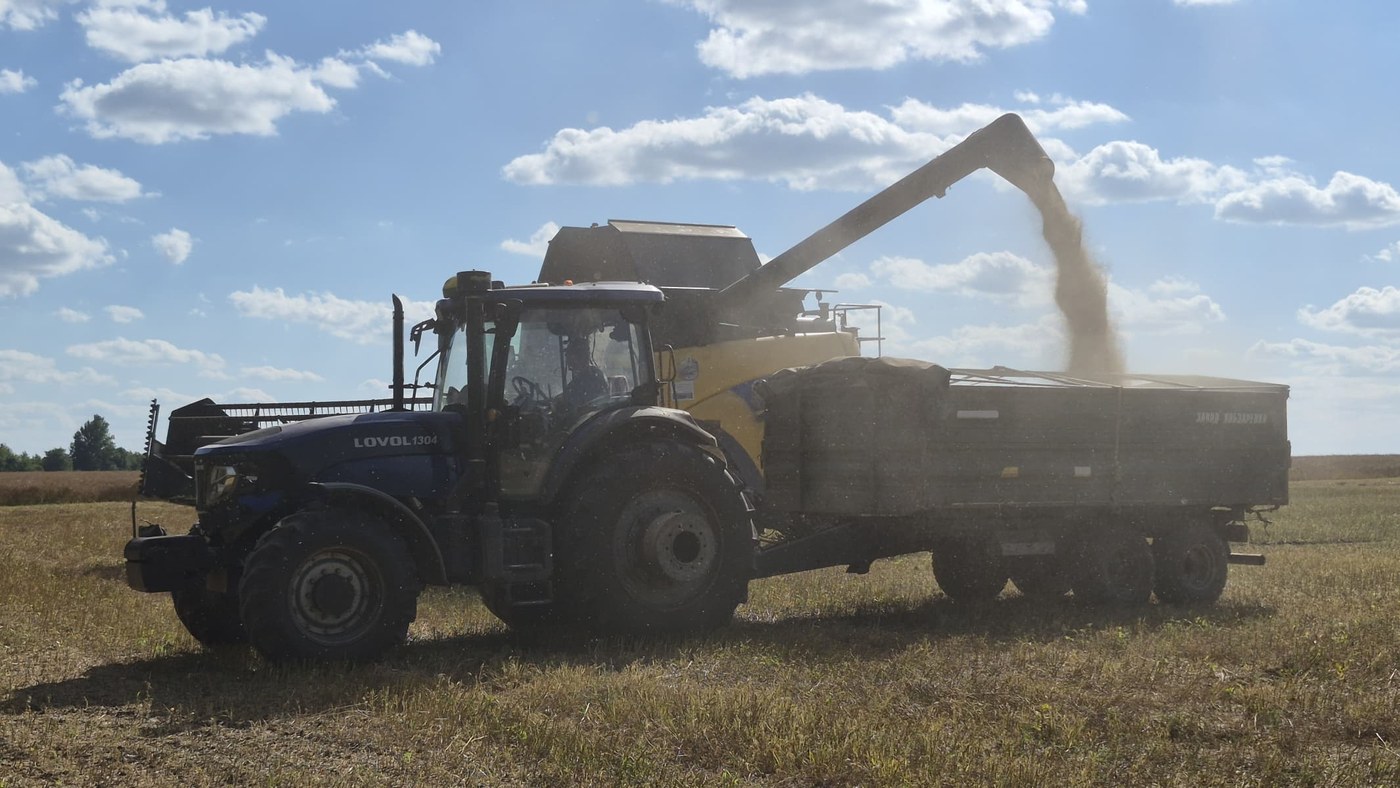
Ukraine's harvest season is moving from wheat and barley into corn, soybeans and sunflower, and farmer Oleksandr Chumak has had a strong yield so far. That should be good news.
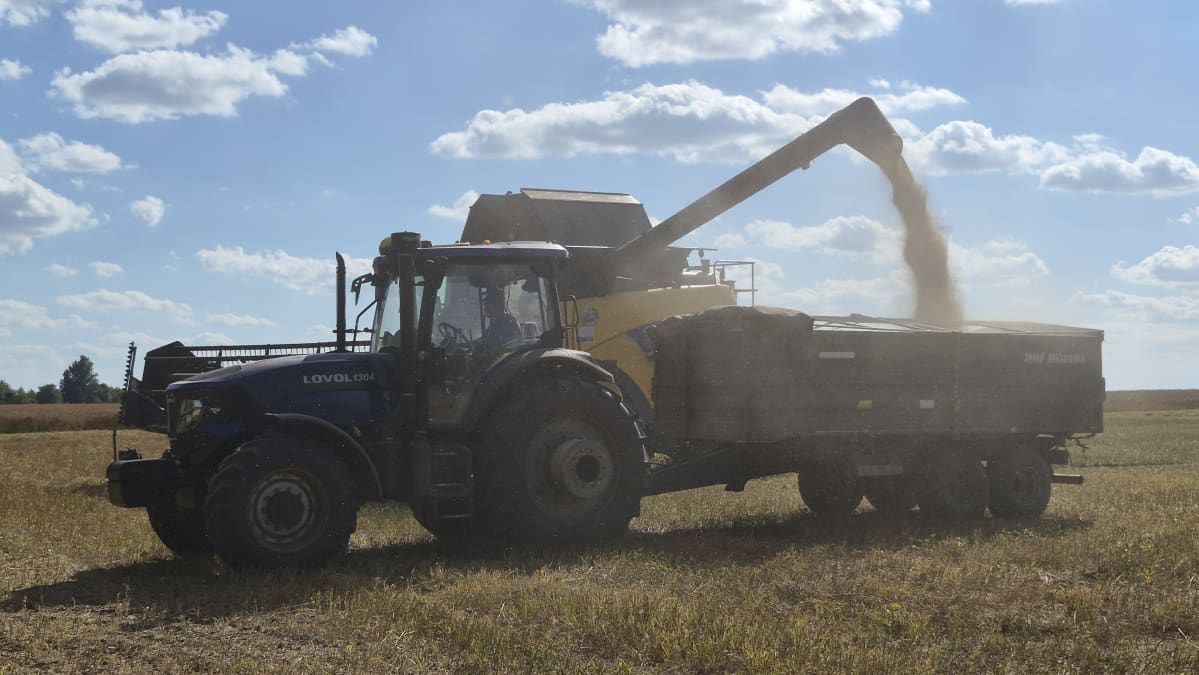
Instead, after 11 years of growing a range of crops in the Odesa region of southern Ukraine, Chumak has had enough.
Storage facilities across both Ukraine and Russia are filled with millions of tons of produce that would normally be sent to Europe, the Middle East, Asia and Africa — but are instead trapped in the warring countries.
Russian drone and missile hits on Black Sea targets intensified over the summer and into fall, making it impossible to insure commercial ships. Kyiv's retaliatory attacks mean Russian exports are now also stuck, further squeezing global supply.
And with fatal Black Sea attacks continuing into October, prospects of a ceasefire look slim, even as Turkey ramps up efforts to broker a deal due to the risk to global food security.
Chumak says that around 80% of his grain cannot currently be sold at a profit, and he is out of cash.
A collapse in domestic prices is giving farmers like him little reason to sow for the 2027 crop in the coming months.
"For the farmers, it's very difficult because we need to pay taxes, we need to pay rent for land, and now we are not able to do this because we are not able to sell anything," said Andrii Dykun, chairman of the Ukrainian Agri Council.
"The only crops we are able to sell are rapeseeds and sunflower seeds. But still, the volume is not enough... So why should we plant if today we have no profits at all?"
"If our stocks will be full, it makes no sense to do any farm operations in the spring because then it's just a waste of time and money."
PrivatBank, Ukraine's biggest lender, told CNBC that it had disbursed 1.53 billion hryvnia ($34.2 million) in working capital finance to agribusinesses between June and August, more than double the 718 million hryvnia lent in the same period last year. Small and medium-sized producers account for 70% of its agricultural loan book.
"Funds effectively remain tied up in grain inventories, while farms still need to cover their ongoing operating expenses and secure financing for the autumn and spring sowing campaigns," said Yevhen Zaihraiev, chief corporate and SME business officer at state-owned PrivatBank.
"We are seeing different strategies among our clients. Some agricultural producers are selling their crops sooner, even at less attractive prices, in order to maintain sufficient operating liquidity. Others, particularly those with access to storage capacity, are postponing sales in anticipation of more favorable market prices," he said by email.
Ukrainian production of grains and oilseeds is forecast to increase to 85 million tonnes from 80 million tonnes this year, but carry-over stocks from the previous season are pressuring Ukraine's storage infrastructure and logistics, Zaihraiev noted. Those facilities include long plastic silobags snaking across fields and towering metal grain elevators that are themselves increasingly vulnerable to military strikes.
"We are also seeing agricultural producers gradually revise their planting plans for next year in favor of oilseeds and niche crops, whose prices are less dependent on logistics costs," Zaihraiev added.
Farmer Oleksandr Chumak said he will follow that strategy, significantly scaling back planting for next year, avoiding corn and barley altogether, and instead opt for crops which require less fertilizer — which is also facing a global squeeze following amid the U.S.-Israeli war with Iran.
Meanwhile, for Ukrainian farmers — those not currently being drafted to serve — the war with Russia is ever-present. "We are living and working in a place where any time you or your circle can be hit by [a] rocket or drone," Chumak said by phone. "We are sleeping in beds with explosions 300 to 1,000 metres around."
Stock release would 'flip the market fast'
Ukraine's agricultural sector has faced farm takeovers, mines and labor shortages ever since Russia's full-scale assault began in early 2022. International bodies have struggled to preserve its export routes through various agreements, including the collapsed Black Sea initiative and the European Union's politically contentious "Solidarity Lanes."
Now, the situation inside the country and the consequences for global food chains are the most severe they have been since the war began.
Between them, Ukraine and Russia supplied the world with more than half of its sunflower oil, nearly a fifth of its barley and 14% of its wheat in the years leading up to the war, according to the UN. Ukraine is also one of the world's biggest growers of corn, with China and the European Union among its biggest buyers.
Around 90% of Ukraine's main agricultural exports typically run via the Black Sea. In August this year, its grain and legume exports totalled 981,000 tonnes, down about 58% year on year.
The risk is heightened by weakness elsewhere. Europe is expected to have a particularly poor corn harvest and needs larger imports just as its demand for feed remains high. The United States is also facing a weaker corn crop.
For now, better wheat and barley crops in Canada, Australia and Argentina, along with good harvests in the Middle East and North Africa, are cushioning the blow.
The continued blockage is supporting commodity prices outside of Russia and Ukraine, but the reopening of Black Sea ports would unleash a wave of cheap supply that would "flip the market fast... with little warning," said Benoit Fayaud, senior manager for grains and oilseeds analysis at Expana.
A deal which restores Ukrainian and Russian exports could see grains prices in other origins decrease by a few dozen dollars, he told CNBC. "They have such big stocks it will be bearish for the market all over the world," he added.
Prices for Russian and Ukrainian wheat, barley, oilseeds and other products have become so low within the countries that it has intensified the scramble to find alternative routes via rail, road and river, according to Fayaud.
But these alternative routes are "difficult and slow from both countries," he said.
Ukraine's Eastern European neighbors such as Poland and Romania are resisting a push to allow grain to transit through them — even temporarily — due to concerns about a glut destroying demand for their own crops.
Another option via the Danube river has been hampered by low water levels; and a key bridge out of Ukraine has been damaged. There are options to export via the Baltic states and through Georgia by land into the Middle East and Central Asia, but this can only cover a small portion of typical flows, Fayaud said.
Andrii Dykun of the Ukrainian Agri Council stressed that there was no alternative to the Black Sea routes when it came to pricing.
"It would always be cheaper for us, even for the farmers on the western border of Ukraine, to sell the grain to other ports from Black Sea ports because it's much more profitable for the farmers than to sell it via the border to [the] EU," he said.
"So without Black Sea ports, it will not work for us at all."