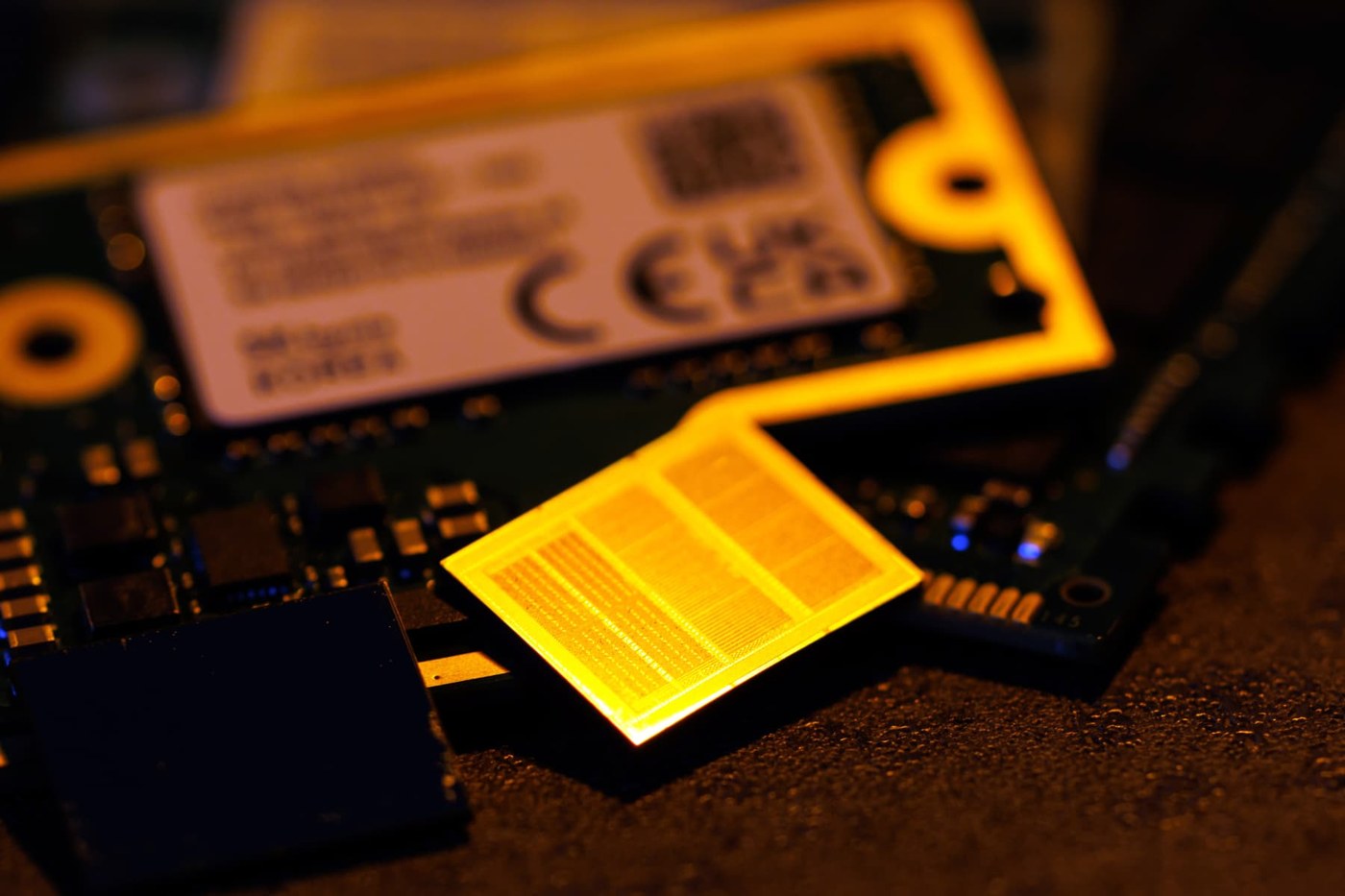
August trade data from South Korea reads like a one-sector success story. Semiconductor shipments more than tripled from a year earlier, lifting the country's overall export figures to a fresh record — and raising a question analysts are now weighing openly: how long can one industry carry the rest of the economy?
Record chip numbers, record share of trade
The Ministry of Trade, Industry and Resources reported earlier this week that semiconductor exports climbed 209% year over year to $46.65 billion in August. That single category accounted for 47.5% of the country's $98.25 billion in goods exports that month.
Officials pointed to surging AI infrastructure demand, as large cloud providers including Google and Amazon ramped up capital spending.
"In my estimate, semiconductor exports accounted for nearly 80% of export growth in August," Jeff Ng, head of Asia macro strategy at Sumitomo Mitsui Banking Corporation, told CNBC. "Overall export growth was driven by chips, computers, and higher petroleum product prices."
Why the boom makes some economists nervous
Headline export growth is usually welcome news. In South Korea's case, however, the speed of the semiconductor surge has sharpened debate over what happens when the cycle turns.
"A gradual slowdown would be manageable. An abrupt stall is a different matter, because the economy already runs at two speeds, and the sectors that would need to take up the slack are the ones under pressure today," according to Dave Chia, an economist at Moody's Analytics.
Monetary policy leaves limited room for error. The Bank of Korea raised its base rate to 3% in August — its second consecutive hike — while core inflation remained elevated. Chia warned that if chip demand cools while policy is still tightening, "the windfall fades when domestic demand isn't strong enough to take over."
Traditional exporters are lagging
Automobile exports fell 29.8% from a year earlier in August. The trade ministry attributed much of that decline to summer-holiday timing and partial strikes, but Chia also cited U.S. tariffs and a shift toward production in American plants as more persistent headwinds.
Not every indicator is bleak. The BOK said in its August monetary policy decision that the recovery in consumption is gradually accelerating, and MOTIR's data showed non-semiconductor exports climbed 20% in August.
Analysts still see a path to steady growth
If semiconductor momentum faded while other cyclical sectors performed well, South Korea could still sustain annual real growth of around 2% to 3%, according to Homin Lee, senior macro strategist at Swiss private bank Lombard Odier.
Near-term outlooks remain broadly constructive. SMBC's Ng expects overall export growth to stay positive over the next 12 months, although it could moderate because of base effects and stabilizing prices.
South Korea's semiconductor and tech export boom has certainly been exceptional, Lee said, though he added that he would not characterize it as "over-reliance" because the country has other cyclical sectors that tend to do well when the broader global economy performs well.