My wife and I recently had a serious discussion: Was it time to pull the plug on Netflix?
Rankled by a seemingly unending streak of price increases — now up to $26.99 a month for the premium tier — we started to question whether it was worth the money.
We ultimately decided to keep it. We're suckers for Netflix's many crime and sports docuseries, and I can't be without crucial NFL games. There's also content my kids are really into. But it was a close call! The fact that we had the discussion at all is a bad sign for a once-unassailable streaming service.
These types of conversations are apparently playing out worldwide as Netflix sees a slowdown in both viewership and revenue. Some consumer-engagement metrics have been outright declining.
Netflix appears to have gotten the message, announcing last week that Chief Content Officer Bela Bajaria would be replaced. The move came a day after Netflix said it would cut about 1,000 jobs, its biggest round of layoffs since 2022. Bajaria was known for adding depth to the Netflix lineup, including areas like sports and live events, reality TV, and video podcasts.
But the streaming service struggled recently to establish what Wall Street calls "watercooler originals," or Netflix-developed shows that cross over into mainstream culture. It's been a pretty barren landscape since "Stranger Things" wrapped up.
And Netflix isn't just competing with other paid streamers anymore. It's fighting YouTube, TikTok, and Instagram for screen time — platforms that offer a never-ending stream of free video content.
Beyond the content problem, investors are still processing the mega-deal Netflix let slip away.
Netflix's Warner Bros. Discovery hangover
Netflix wasn't just trying to make better originals on its own. It also went hard for Warner Bros. Discovery's streaming and studio assets, offering $72 billion for a shot at HBO Max and a deep bench of beloved franchises.
After a significant back-and-forth, Paramount Skydance won the bidding war. It probably helped that Paramount was willing to buy all of WBD, while Netflix only wanted the film and TV studios, as well as HBO Max.
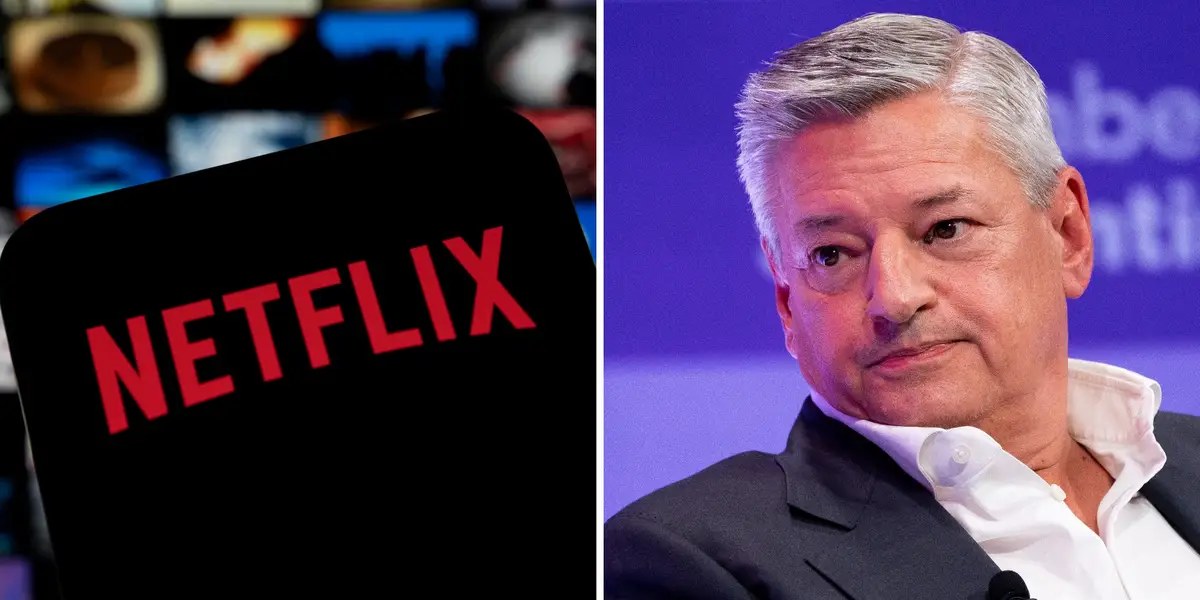
Netflix shares declined as the deal drama unfolded and haven't recovered since. They're down 42% since CEO Ted Sarandos first contacted WBD on October 16, 2025.
The sting isn't simply that Netflix lost WBD. Investors briefly got to imagine a more muscular version of the company — one that could pair its massive distribution engine with HBO, "Harry Potter," DC, and the rest of Warner's franchise vault. Now Netflix still has to prove it can create the next big cultural event itself.
Q3 earnings may not provide much relief
This brings us back to Bajaria's exit. Wall Street analysts across the board are united in their read of the situation: it was a move to get ahead of looming growth problems.
The timing — just days before quarterly earnings — is no accident. If the market gets sticker shock, Netflix wants investors to know it's already on the case.
So if expectations have been lowered for growth, what else is there to watch for in the results due tomorrow? Given the recent upheaval, content will be king. Will Netflix offer a convincing content and growth roadmap for 2027? Does it have the next "Squid Game" waiting in the wings?
My wife and I sure hope so. We may still be Netflix subscribers for now, but the streamer can't afford to have people keep settling for "just good enough to renew."