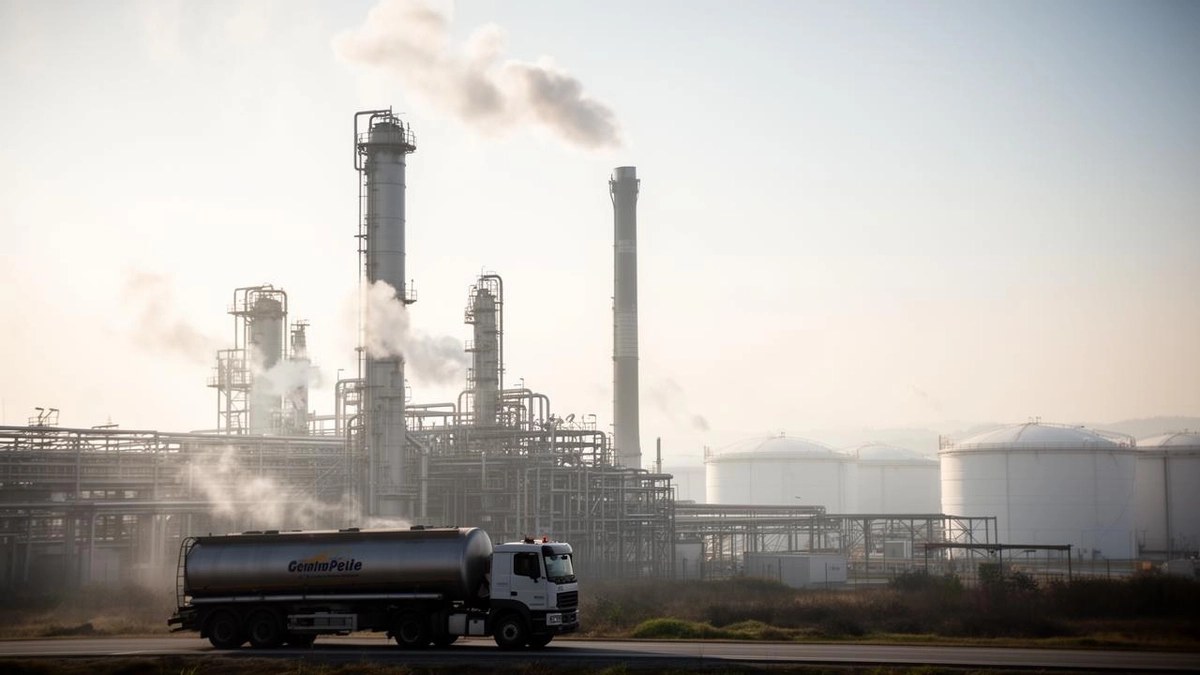
The global energy market is grappling with an unprecedented diesel supply crisis. In the United States, retail diesel prices have historically breached $6 per gallon—nearly double the $3.50 level at the start of the year—while wholesale prices have simultaneously held firmly above $5, signaling that pump-price pressures are far from fully unleashed. Meanwhile, WTI crude futures settled above $102 per barrel on September 10, the highest since May and up roughly 50% from the summer low of $68.55.
Behind this fuel storm lies a cliff-edge contraction in effective global refining capacity, squeezed by the dual pressures of the U.S.-Iran conflict and the Russia-Ukraine war. Bloomberg columnist Javier Blas points out that the core problem is not merely geopolitical friction, but a physical refining capacity bottleneck—central banks can fire up the printing presses to soothe liquidity crunches, but barrels of diesel can never be conjured out of thin air.
Diesel Supply Collapse: From 2.2 Million Barrels to 520,000
According to data from energy tracking firm Kpler, roughly a year ago Russia and Persian Gulf states together exported about 2.2 million barrels per day of diesel to international markets. By August, that figure had collapsed by nearly 75% to just 520,000 barrels. Nearly half of the lost supply came from Russia, where targeted Ukrainian strikes on multiple core large-scale refineries have severely damaged processing capacity.
The Persian Gulf side is equally grim. Saudi Arabia's export-oriented refineries have largely been idled due to war-related disruptions, and unlike Kuwait, the UAE, or Iraq, they have not moved significant volumes through covert routes across the Strait of Hormuz. Consultancy Vortexa notes that since the outbreak of U.S.-Iran hostilities, upstream feedstock contractions have directly dragged down refinery throughput, squeezing diesel exports in turn. End-consumer nations now face a compounding shock of multiple supply disruptions.
Diesel is the most critical "industrial lifeblood" of the global real economy, accounting for nearly 30% of total global oil consumption. Heavy-duty trucks consume half of that output, with the remainder flowing to rail freight, agricultural machinery, factories, mines, and construction sites. Kevin Hassett, Director of the White House National Economic Council, publicly told Fox News that persistently high diesel costs have become a "core concern" for the administration.
Crack Spreads Surge to $65: Refinery Windfalls and Physical Limits
Refining industry profitability has climbed to historic heights. The industry-standard "3-2-1 crack spread"—measuring profit from processing three barrels of crude into two barrels of gasoline and one barrel of distillates such as diesel—has recently spiked to approximately $65. For historical context, between 1985 and 2021, the industry's average profit hovered around just $10.50; even during the 2004-2008 refining "golden age" of surging demand, the figure never breached $30.
This unprecedented windfall has driven refineries worldwide into full-throttle "max diesel" operating mode. However, modern chemical processing units are bound by strict engineering and physical limits. Even by squeezing yields of other products like jet fuel, the room to boost diesel yield is typically only two to three percentage points.
The more sobering reality lies in the sheer scale disparity of the markets. The earlier jet fuel shortage was resolved relatively quickly because global daily consumption was under 8 million barrels—minor production adjustments could rebalance supply and demand. Diesel, by contrast, has a global daily consumption of nearly 29.5 million barrels. Tinkering at existing refineries simply cannot fill a multi-million-barrel daily shortfall. Blas notes that the physical bottleneck at the "cracking" stage has effectively locked out any benefit from increased crude production at the refinery gate.
The China Factor: From Buffer to Potential Accelerant
Throughout the oil price surge, China has played a critical buffering role. According to Kpler data, China's crude imports fell to as low as 6 million barrels per day in June—a wartime record low and nearly half the February level of 11.5 million barrels. Bob McNally, President of energy consultancy Rapidan Energy, estimates that China cut crude imports by 3 to 5 million barrels per day during the war, sustaining operations by drawing on strategic reserves exceeding 1 billion barrels.
That dynamic, however, is now shifting. In July and August, China's crude imports rebounded to around 7 million barrels per day. McNally stated bluntly in a CNBC interview: "The biggest factor suppressing oil prices since the war began was China's massive 'diet.' Now that diet is over—they're thirsty and hungry again, and they've started buying crude once more."
The core driver luring Chinese refiners back to the market is precisely the extreme level of crack spreads. Rebecca Babin, Senior Energy Trader at CIBC Private Wealth, said: "When refining margins are this high, you can't look away. They'll buy crude, process it into products, and sell into the market to make money." She also warned that once Chinese refineries fully ramp up utilization rates, crude demand will strengthen further—a variable the market has yet to fully price in.
That said, most analysts believe China's purchases will not fully return to pre-war levels. Amrita Sen, founder of Energy Aspects, notes that while China's buying has picked up from spring levels, it will not recover to its previous scale. Matt Smith, Director of Commodity Research at Kpler, adds: "China is a very savvy buyer. Facing triple-digit oil prices, they'd rather draw down reserves and adjust run rates than scramble to buy at elevated prices."
Traditional Tools Failing; Rebalancing Requires "Demand Destruction"
Faced with fuel shortages, traditional intervention tools are repeatedly falling short. The United States and Japan have aggressively released strategic petroleum reserves, but what they've deployed is almost exclusively crude oil—not ready-to-use refined products. While shale drillers across the Americas, along with producers in Canada, Brazil, and even Guyana, are accelerating activity, that only increases the speed at which crude reaches ports. Upstream production increases are measured in weeks; building or expanding a complex modern refinery takes years of engineering and construction.
The global crude inventory buffer is also depleting rapidly. According to the U.S. Energy Information Administration (EIA), after more than six months of war-driven consumption, global crude inventories have plunged by 400 million barrels. Emergency reserve releases across nations are also nearing their end, meaning yet another line of defense against rising prices is crumbling.
In the short term, if hostilities cannot be quelled, the market's only remaining buffer may be the weather. Thanks to El Niño conditions, the Atlantic hurricane season has been relatively mild. Data from Colorado State University shows storm activity this year is at its lowest level since 1950, sparing refineries in Texas and Louisiana from extreme-weather power outages and shutdowns. Additionally, if autumn and winter temperatures run warmer than normal, heating oil demand in Europe and the U.S. could soften, freeing up some diesel resources.
But banking on climate favors is no solution. Under the physical law that diesel cannot be "printed out of thin air," the ultimate rebalancing of this crisis can only come from high prices forcing downstream spending cuts—matching scarce supply by "destroying real demand." What gets held hostage in the process is the global logistics network and deeper macroeconomic costs.
McNally's assessment is blunt: "Summer is over, peace hasn't arrived, and the war continues." He notes that the Trump administration's past reliance on verbal intervention to soothe markets has lost much of its effectiveness.