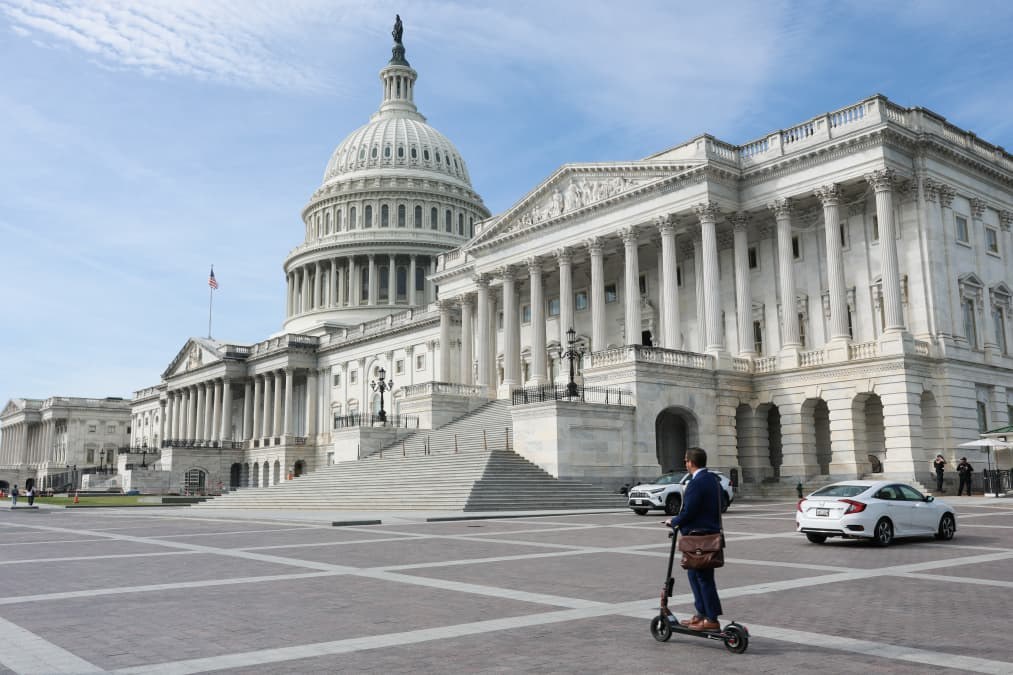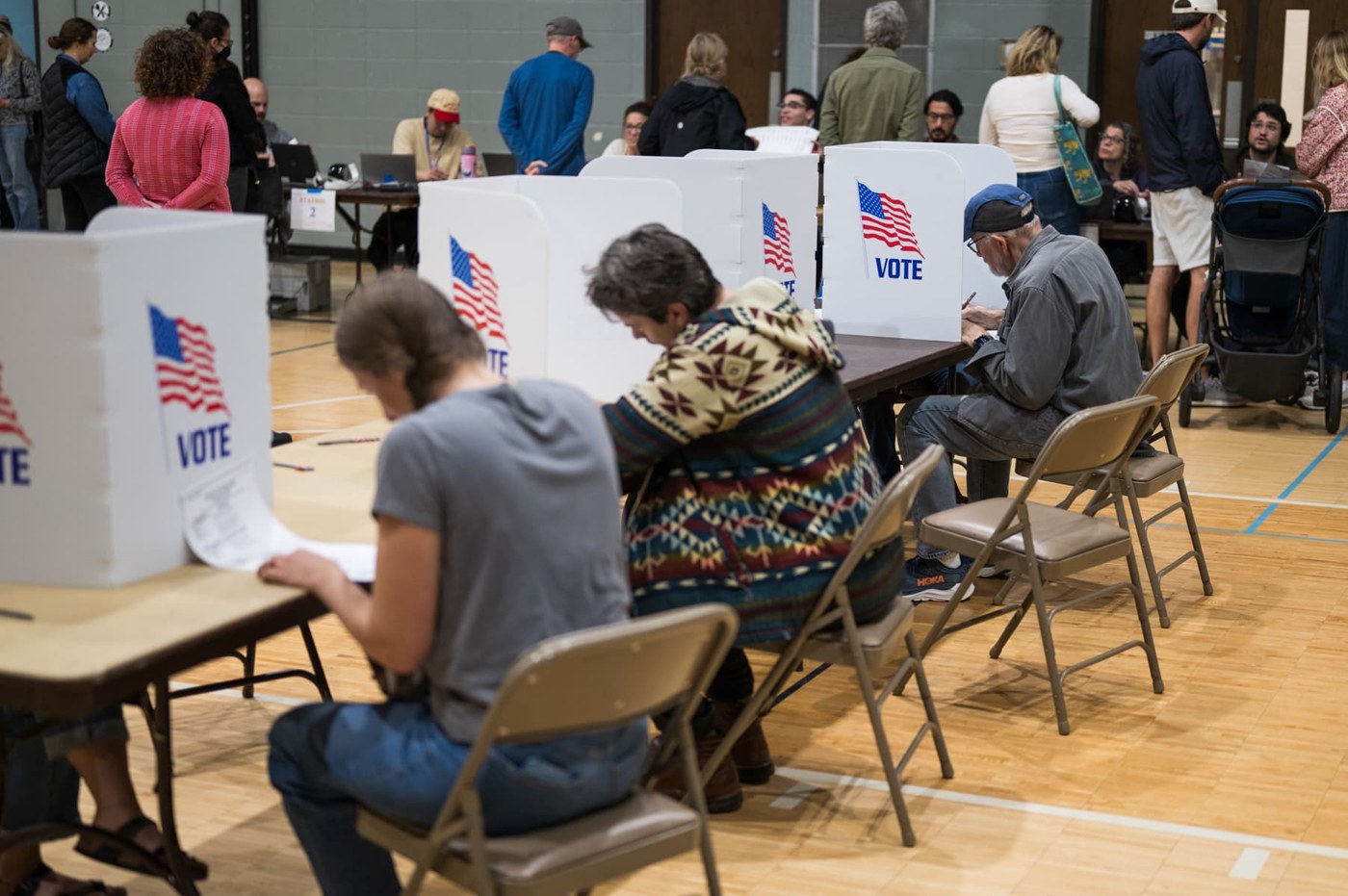
The outcome of Tuesday's election is expected to have broad implications across the market, including municipal bonds.
The spotlight has been on the battle for congressional control and whether Democrats will wrest the House of Representatives, the Senate or both from Republicans. But for the muni market, what happens at the state level could have bigger repercussions — at least in the near term.
There is an array of initiatives on ballots around the nation that could change tax laws and add to bond supply. Taxes matter to muni investors since the income received is free of federal tax, as well as state tax if the holder lives in the state where the bond is issued.
Red vs. blue taxes
Depending on the location, ballot measures are up for approval that would either provide tax breaks, or raise taxes on the wealthy.
"It's a complete bifurcation between red and blue states," said Dan Close, head of municipals at Nuveen. "Blue states are trying to put in place graduated income tax structures, trying to capture more revenue from high-income earners. Red states are promoting affordability by trying to cut property taxes."
Red states are those that predominantly vote Republican, while blue states swing toward Democrats.
For instance, California has a proposition known as the "billionaire tax," which would impose a one-time levy equal to 5% of the wealth of certain taxpayers with at least $1 billion in assets. The state also has a measure on the ballot that would make a temporary tax hike permanent on individuals earning over $371,000, adjusted annually for inflation. The tax is currently set to expire in 2031.
"The impact to the muni bond market will be to make the exemption more valuable," Close said of the possible passage of tax increases. Investors will likely seek shelter in the muni market, which would send bond prices higher, he noted.
It is a different story in Florida, where voters are set to decide whether to increase the Sunshine State's homestead exemption for non-school district property taxes. Qualified homeowners currently have a $25,000 property tax exemption, as well as another for $25,000 that doesn't apply to school property taxes. The new proposal raises the latter exemption to $150,000 in 2027 and $250,000 by 2028. New residents have a five-year waiting period before receiving the benefit.
If passed, some local governments will have to find other revenue sources or increase the overall tax rate to replace what they've lost, said Tom Kozlik, head of public policy and municipal strategy at HilltopSecurities.
"It's not necessarily going to result in downgrades for sure, but there would have to be some balancing with regard to overall revenues," he said.
Not all municipalities will be hurt equally, which means credit research is important, said Close.
"Like everything in municipal finance, it is really on a case-by-case basis that you could have some credit deterioration from [a] rollback of property taxes," he said.
Increased supply
Other voters on Tuesday will be asked to approve more state or local government debt. That could weigh on a market that has already seen heightened supply.
Some $473.8 billion has already been issued year to date, through September, according to the Securities Industry and Financial Markets Association. That's a 7.8% increase over the same period a year ago. In 2025, total muni issuance reached $587.3 billion, 14.3% higher than 2024, Sifma said.
Cooper Howard, director of fixed income research and strategy at the Schwab Center for Financial Research, believes supply is the biggest issue coming out of the election.
"That amount of issuance has been one of the reasons why you have to see that strong amount of demand continue to keep pace with it for total returns to keep up," Howard said.
Fortunately, new supply doesn't necessarily come quickly into the market. "There's a window over a couple years that they can issue," he noted.
The ultimate makeup of the next Congress could also have consequences for muni investors as lawmakers sort out their priorities. Most notable is what lawmakers will do to tackle the country's affordability problem, Kozlik at Hilltop said.
"There could be some tax policy initiatives and even affordability-related initiatives that manifest themselves in the first quarter of next year," he said. "That could impact housing. It could impact higher education. It could impact public power financing."
Opportunities now
Investors considering moves before the election may want to look at those states with tax increases on the ballot, said Close at Nuveen.
For instance, Nuveen recently began offering a separately managed account dedicated to Washington after getting an enormous number of inquiries from financial advisors. The state recently enacted a 9.9% tax on individuals with taxable annual income above $1 million, set to go into effect in 2028. But the issue is now being put to voters, who can decide whether to repeal the new law.
"At the margin, if you do think that some of these measures are going to pass, knowing that bonds usually move up with an increase in taxes, there might be some opportunities to buy ahead of the election for blue states," Close said.
Howard believes munis are attractive right now, particularly for those who are in a tax bracket of 24% or above. Fundamentals are good and the bonds largely have good credit quality, he said. "About 70% of the broad muni index is either triple-A or double-A rated."
Kozlik is also bullish, calling yields "really attractive." He suggests investors concentrate on AA-rated or higher bonds.
"The muni space is part of the portfolio that most investors want," he said. "It helps them sleep well at night."