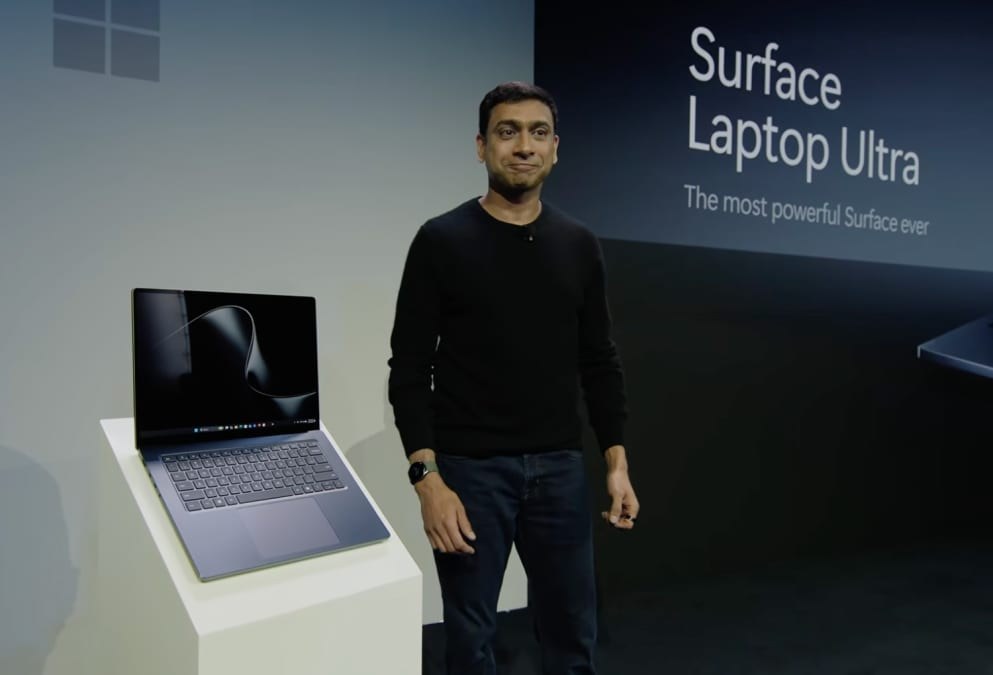
Microsoft said its new laptop containing an Nvidia AI chip will start at $2,599, as the software maker tries to bring more artificial intelligence capabilities to its consumer devices.
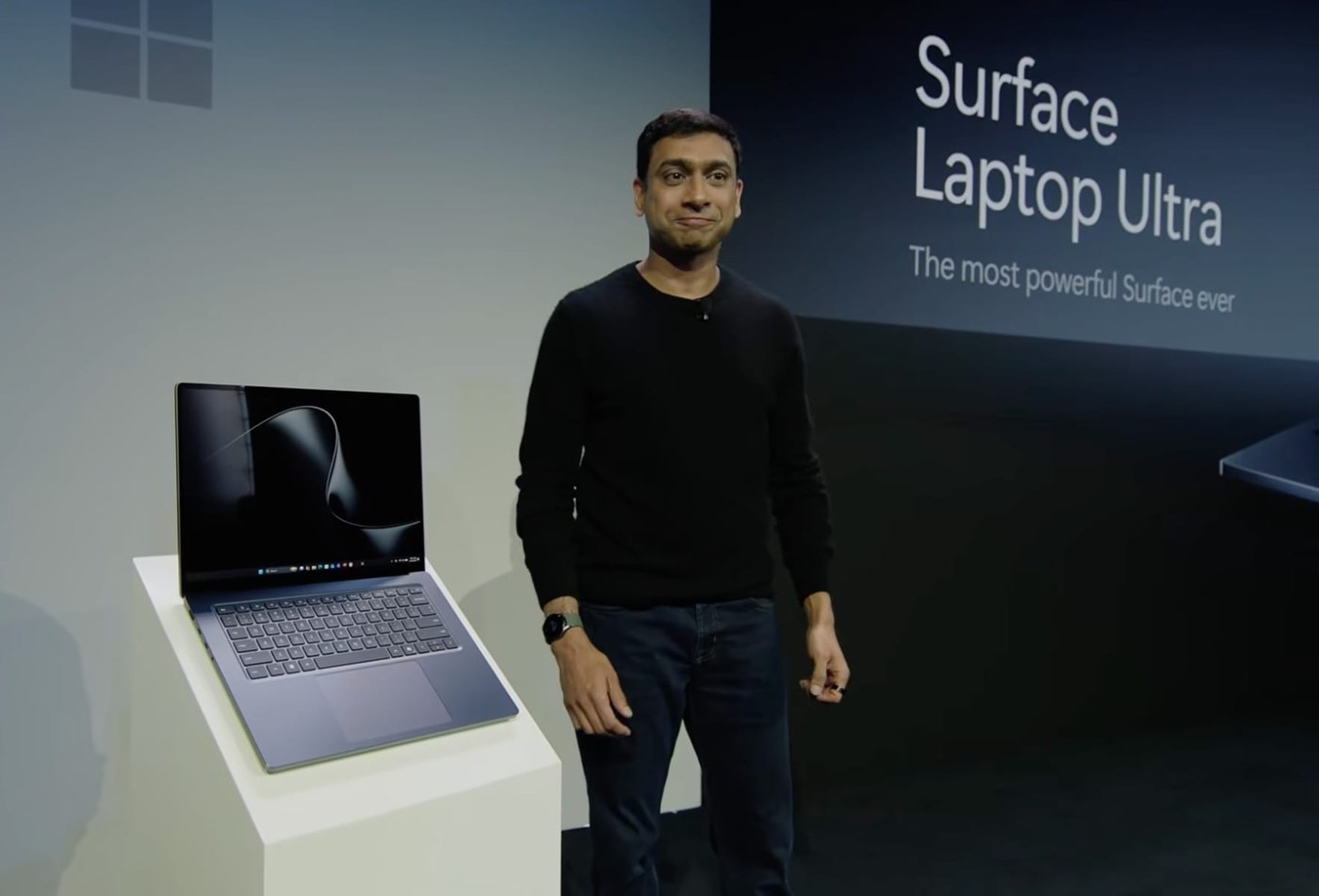
The Surface Laptop Ultra is now available on preorder and will begin shipping on Oct. 16, Pavan Davuluri, Microsoft's executive vice president of Windows and devices, said at a company event in San Francisco on Wednesday. The computer has the world's first magnetic USB-C port, similar to Apple's MagSafe charging connector, along with two other standard USB-C ports, Microsoft said in a blog post.
While Microsoft Windows is the most popular operating system for PCs, the company isn't among the top six PC vendors in terms of unit shipments, according to an estimate from researcher Gartner. As the AI boom matures and chip technology advances, tech giants including Microsoft, Apple and Google are aiming to allow users to run more AI workloads from their devices rather than relying on the cloud.
Users can install and run a variety of models on the new laptop without having to worry about racking up high monthly bills. Microsoft first talked about the Surface Laptop Ultra in May, but is just now providing specifics.
"Microsoft might get me back to Windows," Max Weinbach, an analyst at Creative Strategies, wrote on X after the announcement.
Davuluri also said that Meta will introduce a version of its popular Muse AI agent for Windows, capitalizing on the surging popularity of the personal agent, which has jumped to the top of Apple's App store, surpassing ChatGPT.
Microsoft is still trying to solidify its role as a key player in AI. The company offers its own AI models, but they're less popular than leading models from OpenAI and Anthropic and aren't at the forefront in terms of performance, according to one benchmark. Developers are more likely to have used alternatives, according to a recent survey.
This isn't the first time Microsoft has sought to use the AI boom as a way to boost sales of its devices.
In 2024, the company introduced the Copilot+ PC standard, requiring the inclusion of neural processing units that ensure a minimum level of AI performance, along with compliant Surface computers. But Microsoft has since "simplified product naming to lead with the Surface brand, while continuing to deliver premium hardware and hybrid AI experiences," a spokesperson said.
The new device can contain up to 128 gigabytes of unified memory and supply up to one petaflop of computing power. The Blackwell RTX Spark GPU inside the computer has as much processing power as Nvidia's DGX-1 data center server from 2016, which cost $250 million, Nvidia CEO Jensen Huang said at Wednesday's event.
A presenter showed how apps on the Surface Laptop Ultra can route some AI coding requests run on the computer's local GPU, displaying a green leaf icon, and others to the cloud. Through Windows 11, developers can confine coding agents to Microsoft Execution Containers that will prevent unwanted system access.
Microsoft is updating its Windows 11 device setup experience to help people get started quickly with open-source OpenClaw AI agent software.
Microsoft has been releasing its own computers since 2012, and CEO Satya Nadella indicated on Tuesday that the company's position in the market is evolving.
"I think today is the day we'll start talking and thinking about the frontier ecosystem taking maybe slightly different contours two years from now, five years from now, 10 years from now," Nadella said at the event. "That classic edge that distributed computing will always remain distributed will be more true."