- Published
Senior banking executives have told the BBC they expect the sector to be "on the menu" when the chancellor announces his Budget in two weeks' time.
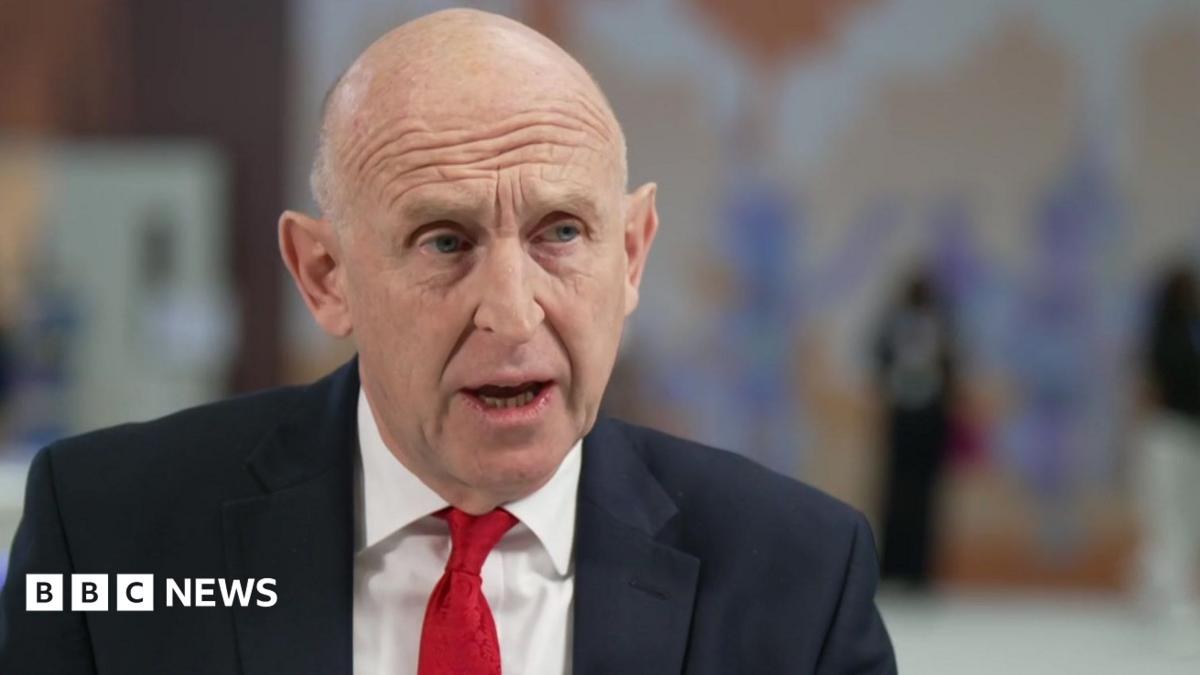
John Healey has described the banks as part of "the crown jewels" of the UK economy, yet has refused to rule out a raid on the sector.
The biggest four banks collectively made around £15bn profit in the first six months of this year, leading to calls from trade unions and others for additional taxes.
However, the banking sector trade body, UK Finance, warned that "further increases in bank taxes would weaken competitiveness, discourage investment and job creation, and work against the government's ambition to deliver growth in every postcode".
The UK's biggest banks and building societies currently pay a surcharge of 3% on top of the baseline 25% rate of corporation tax, plus a levy on the assets held on their balance sheets.
The sector contributed nearly £40bn to the Treasury last year, if income tax on employees is factored in.
The bank levy generated £1.4bn last year and the surcharge a further £1.2bn.
There are a number of ways the chancellor could extract more money from the sector.
The 3% surcharge was reduced from 8% under Rishi Sunak, at the same time as he raised corporation tax from 19% to 25%. Returning the surcharge to its previous level could raise around £2bn a year.
The bank levy currently charges 0.1% on outstanding short-term loans and 0.05% on longer-dated loans, although mortgages are excluded from the calculation.
In the past banks have successfully argued that higher taxes would risk making the UK uncompetitive with other jurisdictions and would reduce their ability to lend, and therefore be anti-growth.
In truth, banks were pleasantly surprised they were not hit at the last Budget, given the large profits they have been making in recent years. Rising interest rates have expanded the margin between the rate at which they lend to customers and the rate they pay savers.
There is another option that has been discussed with Treasury officials. Currently banks can use losses from the past to offset against profits - thereby reducing their tax bill in any given year. Lloyds in particular has been a beneficiary of this policy, as large losses from the financial crisis have been used to lower tax bills ever since.
Some analysts and bank executives have pushed the idea of a moratorium on this practice for a few years, which would yield an estimated extra £1bn per year for the Treasury. That would provide a windfall while being "a lot more bearable", in the words of one bank executive.
It would also spare foreign banks from an additional hit, including JP Morgan, whose chief executive Jamie Dimon has warned that the UK already has one of the highest tax burdens on banks in the world. He warned that adding further sector-specific taxes could discourage investment and damage competitiveness.
However, industry leaders say any form of tax rise that hits UK banks and exempts foreign banks' operations in the UK would be hard to square with the government's push to back British business.
Whatever form it takes, banks believe the chancellor now has much more of an appetite to take a larger slice of their pie.
Get in touch
Do you have comments or questions about this story? Get in touch.
Related topics
-
- Published27 September
-
- Published6 hours ago